
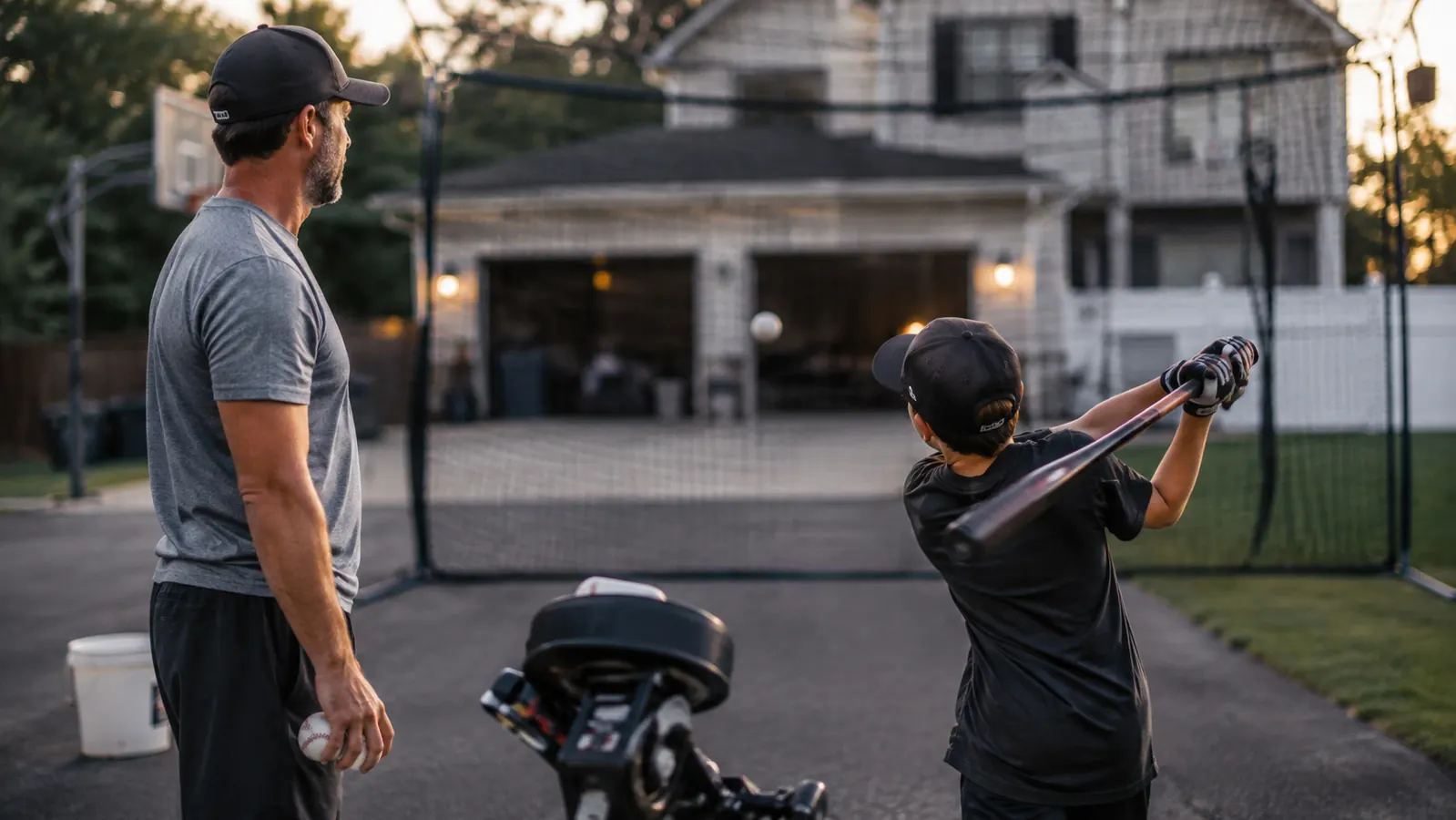
I get my son Jonah every other weekend. That's the custody schedule, that's what we agreed to, and it means I get roughly forty-eight hours a month where the two of us are actually in the same house. For about a year, a big chunk of those forty-eight hours went to me standing sixty feet away from him with a bucket of baseballs, throwing pitch after pitch so he could get his swings in before Monday practice, until a Louisville Slugger Blue Flame pitching machine ended up taking that job off my hands instead.
I didn't resent the batting practice itself. I resented what it was taking from the time we had. Jonah was nine, playing his first season of machine-pitch after two years of coach-pitch, and he wanted reps badly. I wanted to give him reps. But I also wanted to grill something with him, or throw a football around, or just sit on the porch and hear about his week without one of us counting how many balls were left in the bucket.
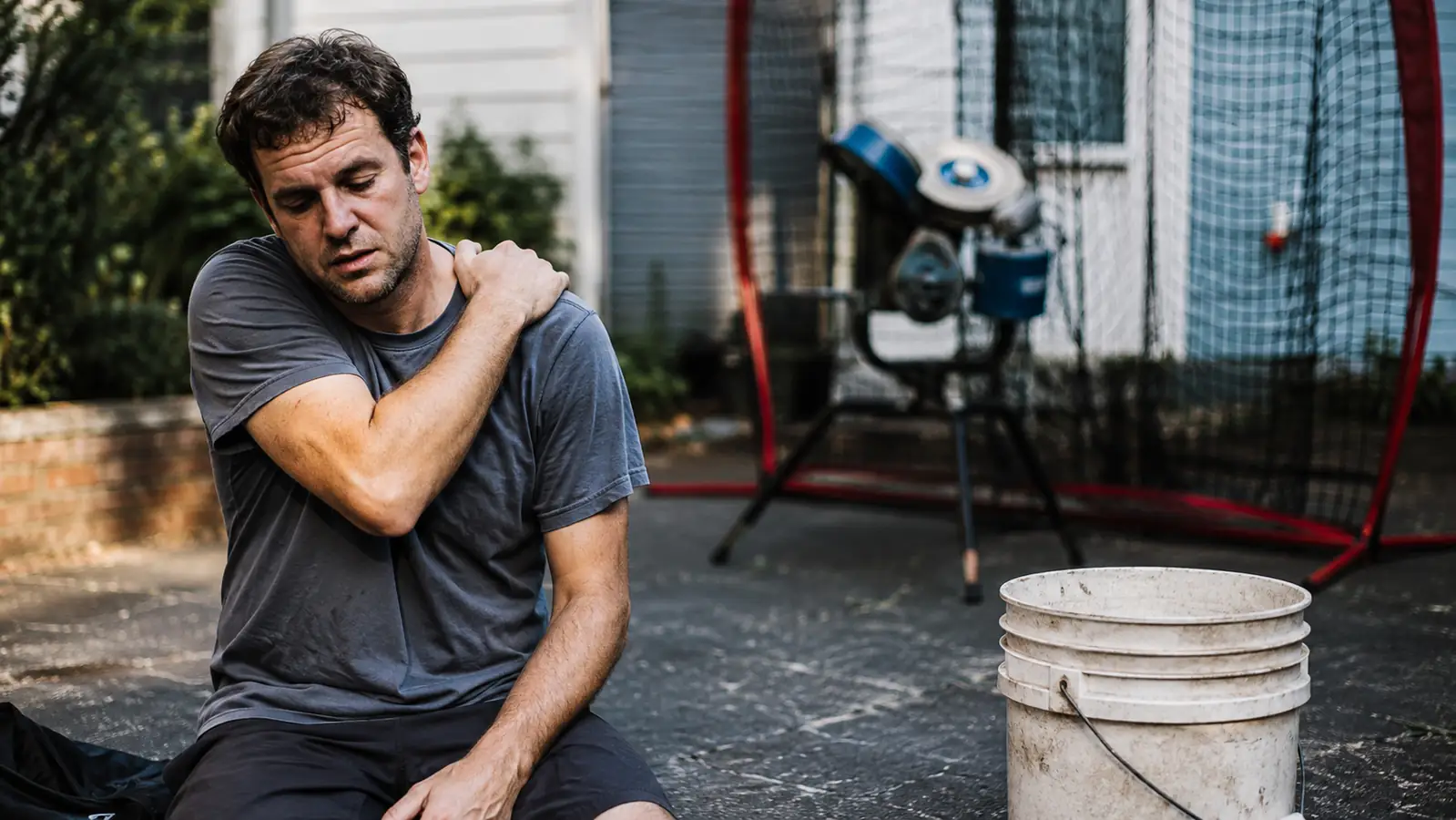
The other problem was my shoulder. I'm forty-four, I haven't pitched competitively since high school, and lobbing sixty to eighty pitches at a consistent speed and location for thirty straight minutes is a different animal than I remembered. By Sunday evening, every other weekend, my shoulder ached enough that I was popping ibuprofen before dinner. And here's the part that actually bothered me: my pitches weren't even that consistent. Some were belt-high, some in the dirt, some he could barely reach. Jonah was working on his swing off inconsistent data from an exhausted forty-four-year-old arm.
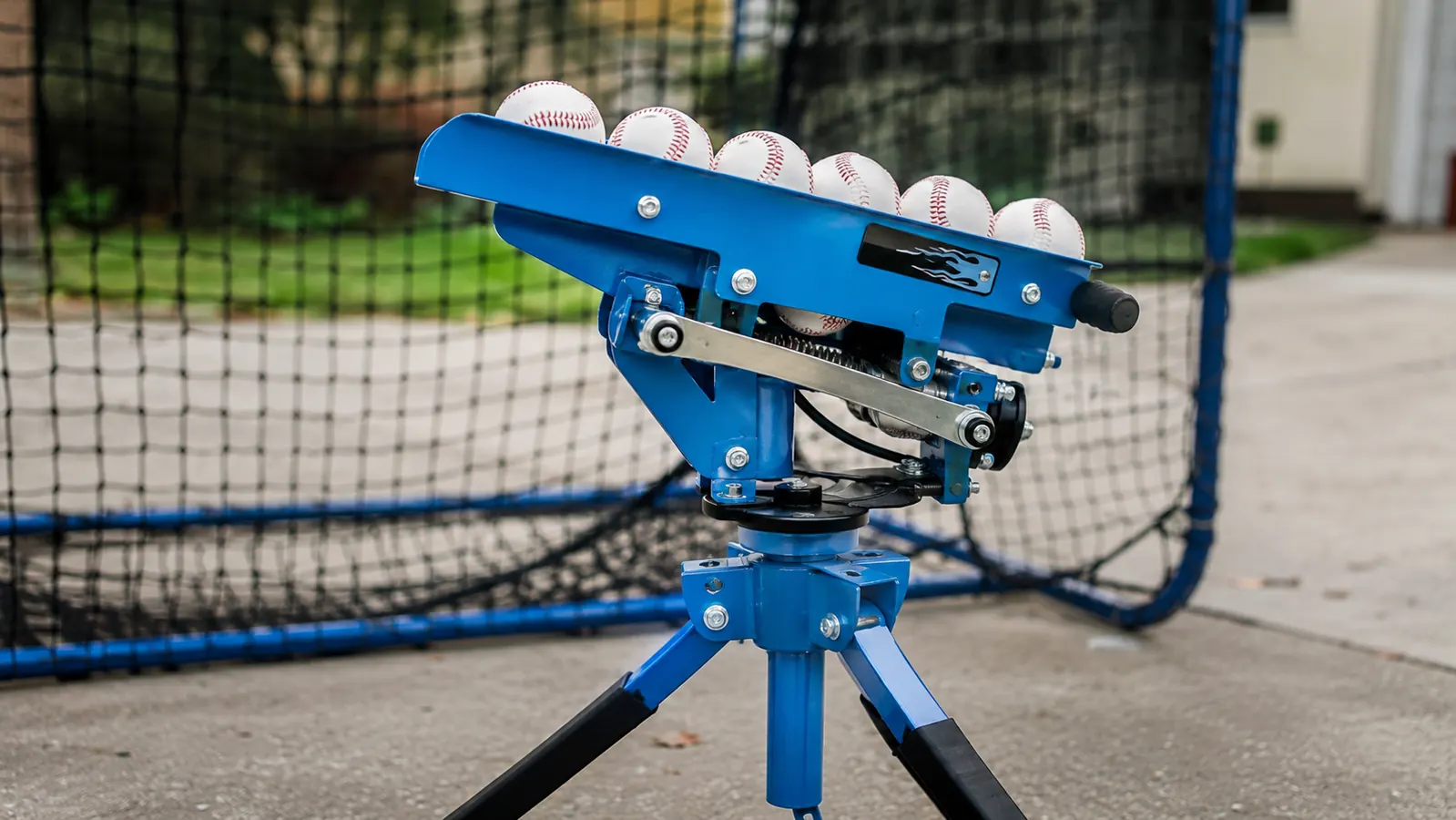
A guy at his game mentioned he'd picked up a Louisville Slugger Blue Flame pitching machine for his own driveway setup, something in the mid range, plug it in or run it on batteries, dial in the speed, and let it throw the same pitch over and over without getting tired or sore. I'd always pictured pitching machines as the kind of thing a real training facility owns, not something that shows up on a porch in a cardboard box. That assumption cost me a full season of Sunday shoulder pain before I actually looked one up.
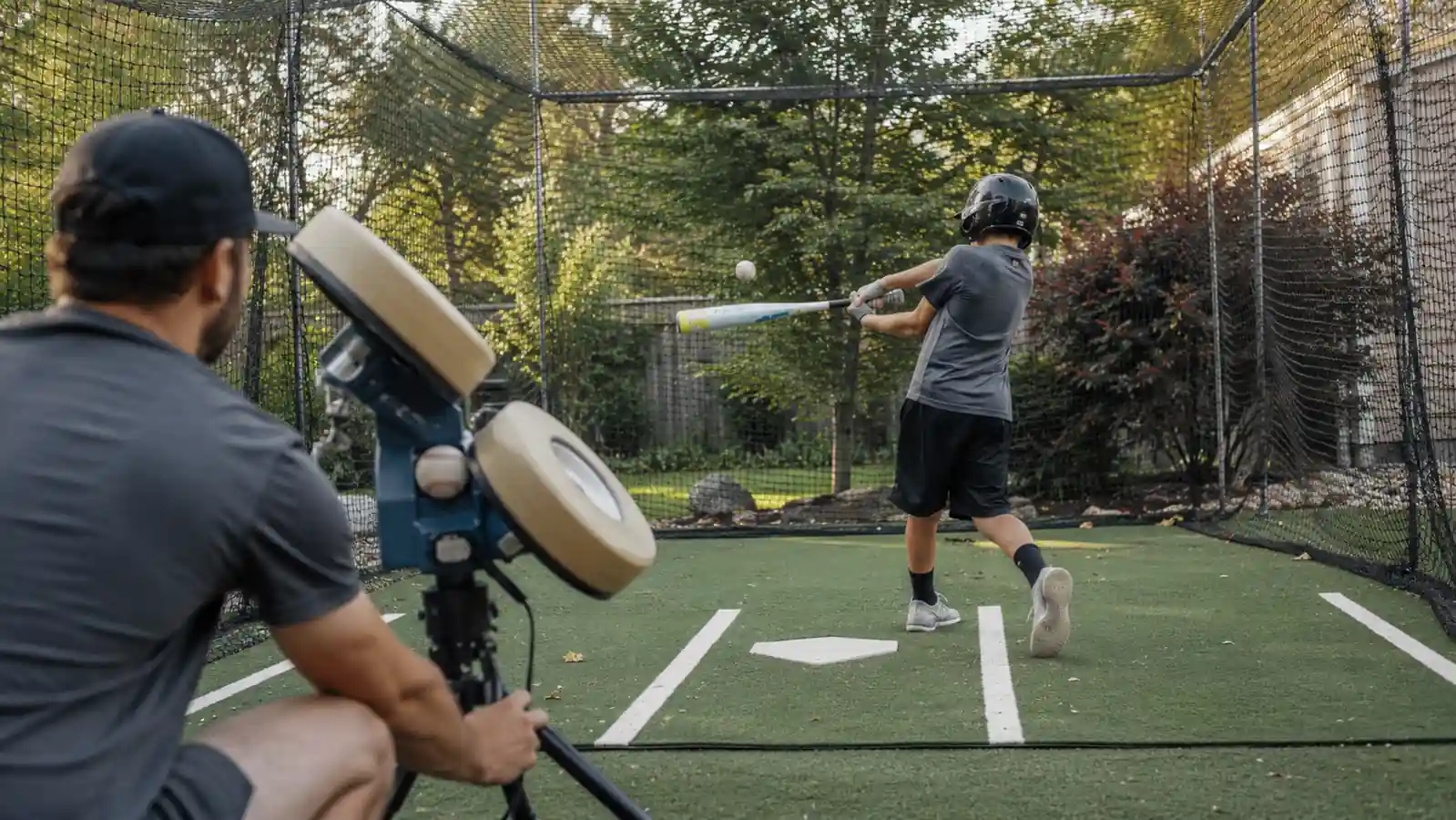
I ordered it that week, mostly out of curiosity about whether it would actually hold up outdoors on a tripod in a driveway net, and partly because I was tired of feeling like the weekend's only job was pitching.
I didn't buy a training tool. I bought back the part of the weekend where I got to just watch my son hit, instead of being the one throwing to him.
Tired of being the arm behind every batting practice session?
If your weekends with your kid keep turning into an unpaid pitching shift, this is the machine that fixed that for us. See the current price on the Louisville Slugger Blue Flame.
Amazon Check Today's Price on Amazon →Setup on the Louisville Slugger Blue Flame took about fifteen minutes the first time, mostly me reading the manual twice to make sure I had the tripod legs locked right. After that it was maybe five minutes to get it out, loaded, and dialed to a speed that made sense for Jonah, somewhere around 35 miles an hour to start, which sounds slow until you're nine and it's coming at you from a mound distance closer than a real pitcher's.
The first session, I stood next to Jonah instead of sixty feet in front of him, and it felt strange in a good way. I could actually watch his front foot, point out when he was drifting instead of staying balanced, talk to him between swings instead of catching my breath between pitches. He got through more reps in twenty minutes than we used to get through in forty, because the machine doesn't need a water break and doesn't throw one pitch in the dirt out of every five.
It's not silent, and it's not invisible in a driveway, our neighbor asked about it twice before I explained what it was. It also occasionally jams if a ball goes in slightly crooked, which cost us a couple minutes of troubleshooting the second weekend, nothing dramatic, just something I'd tell anyone to expect rather than be surprised by.
What mattered more than any of that was what happened three weekends in. Jonah's coach mentioned he was catching up on his timing against the actual kid-pitch he was seeing in games, said his front side had gotten quieter. I hadn't done anything different as a coach or a teacher. I'd just given him more consistent reps and had enough energy left over, on the weekends I actually have him, to be his dad instead of his pitching machine.
What I'd Tell You If We Were Sitting at My Kitchen Table
If your version of weekend batting practice is leaving your arm sore and your actual time together shorter, that's the real cost nobody puts on the price tag. A mid-priced machine isn't going to turn your kid into a better hitter by itself, and it won't replace a real coach's eye on mechanics. What it does is take the exhausting, inconsistent part of BP off your plate so you can spend that time coaching instead of just surviving the bucket. If you've only got every other weekend, or even if you've got every weekend but you're tired of your shoulder deciding how long practice lasts, it's worth the fifteen minutes it takes to set up. If you've got a pitching parent on the team, or your kid is still fine with slow-pitch tee work, you probably don't need this yet. I did, and I wish I hadn't waited a season to find that out.
Get your weekend back from the bucket of balls
It cost me a full season of a sore shoulder before I tried this. See the current price on the machine that changed how we spend our time together.
Amazon Check Today's Price on Amazon →