
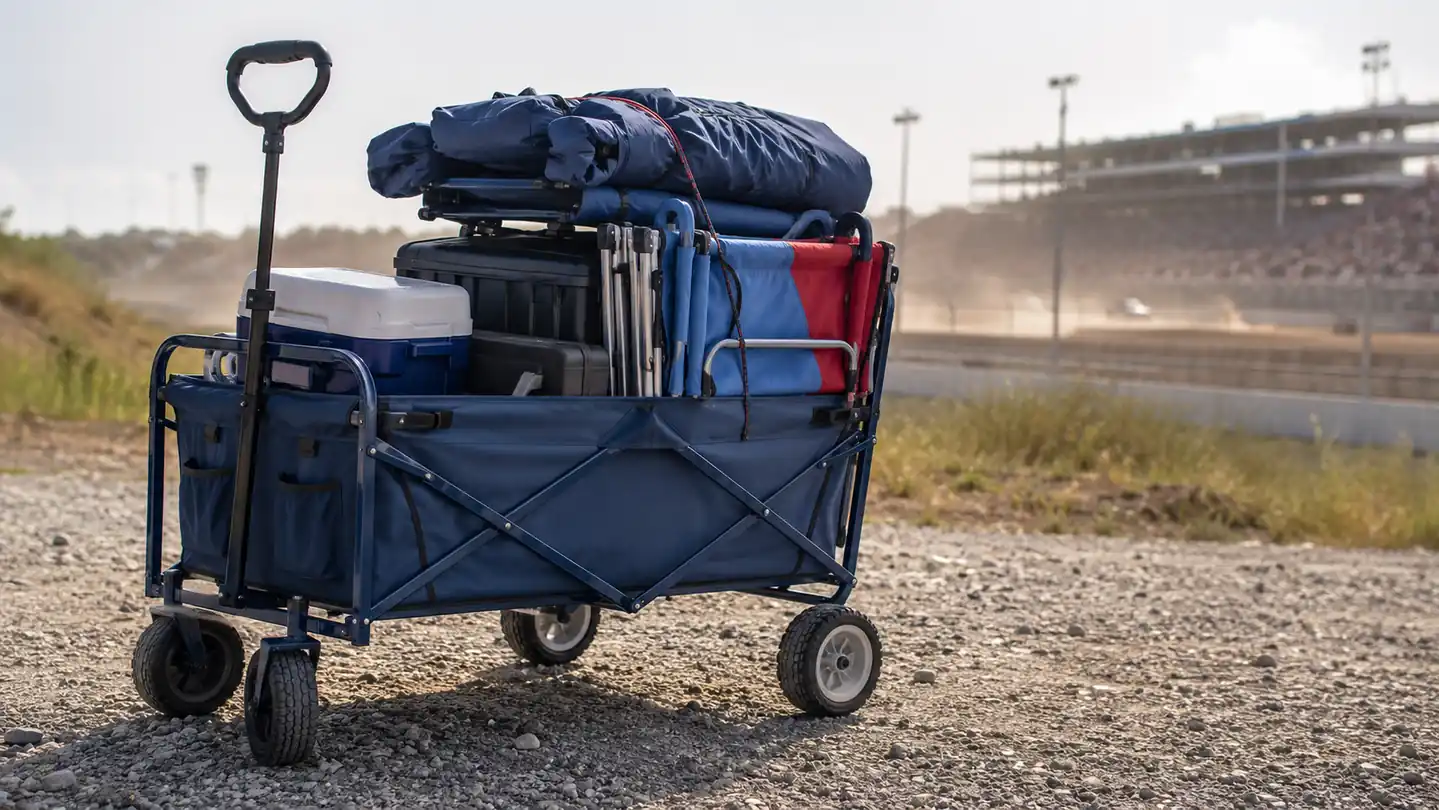
The first time I packed a folding wagon for a race weekend, I did it the way I'd pack a trunk, which is to say badly. I set the cooler in last because it was the heaviest thing and I didn't want to lift it twice, then stacked chairs and a tarp on top of it, and by the time I got the whole thing from the truck to our spot on the fence line, the cooler had slid to one side, the chairs had bounced out twice, and I was steering a wagon that pulled hard to the left the entire way. It worked, technically, but it was a mess I didn't need to make.
Since then I've packed a Mac Sports folding wagon for enough race weekends, plus a full season of hauling my nephew Deacon's catcher's gear to ballfields, that I've got the load order down to something closer to a routine than a guess. This guide walks through how to actually pack a folding wagon for race day so it rolls straight, survives gravel, and doesn't turn the walk back to the car into a second workout after you're already tired.
Stop making three trips from the truck when one packed wagon would do it.
A 150-pound capacity steel frame like the Mac Sports gives you enough room to pack a cooler, chairs, and a tarp in one load without worrying about the frame flexing. Check today's price and current availability on Amazon.
Amazon Check Today's Price on Amazon →Step 1: Load Heaviest Items Low and Centered First
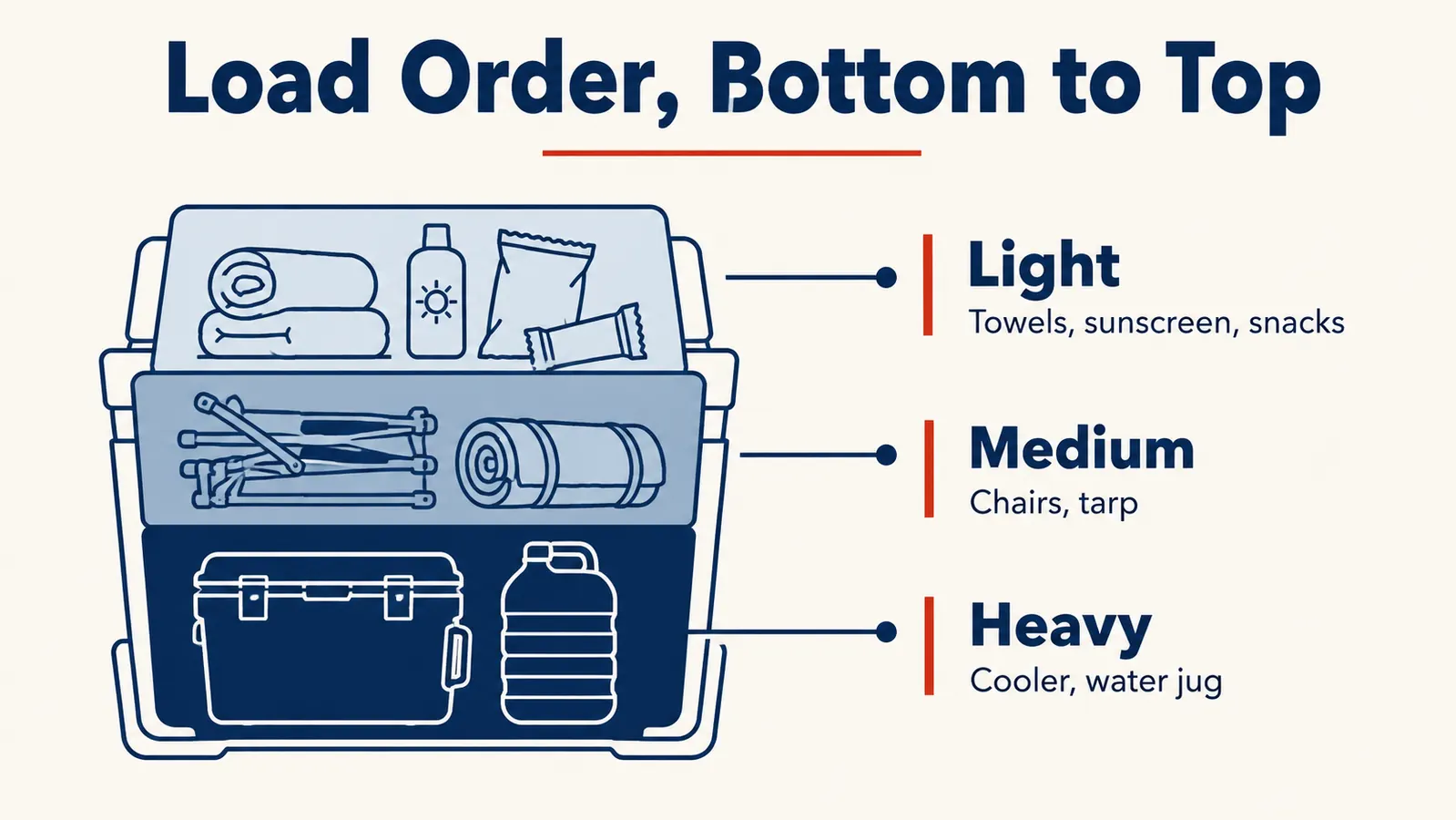
The single biggest mistake I made that first weekend was loading by convenience instead of by weight. A folding wagon has a fabric bed slung inside a steel frame, and that bed sags a little under real weight no matter how good the frame is. If the heaviest thing you own, usually a full cooler, ends up sitting off-center or on top of everything else, that sag becomes a lean, and a leaning wagon pulls to one side and wants to tip on uneven ground.
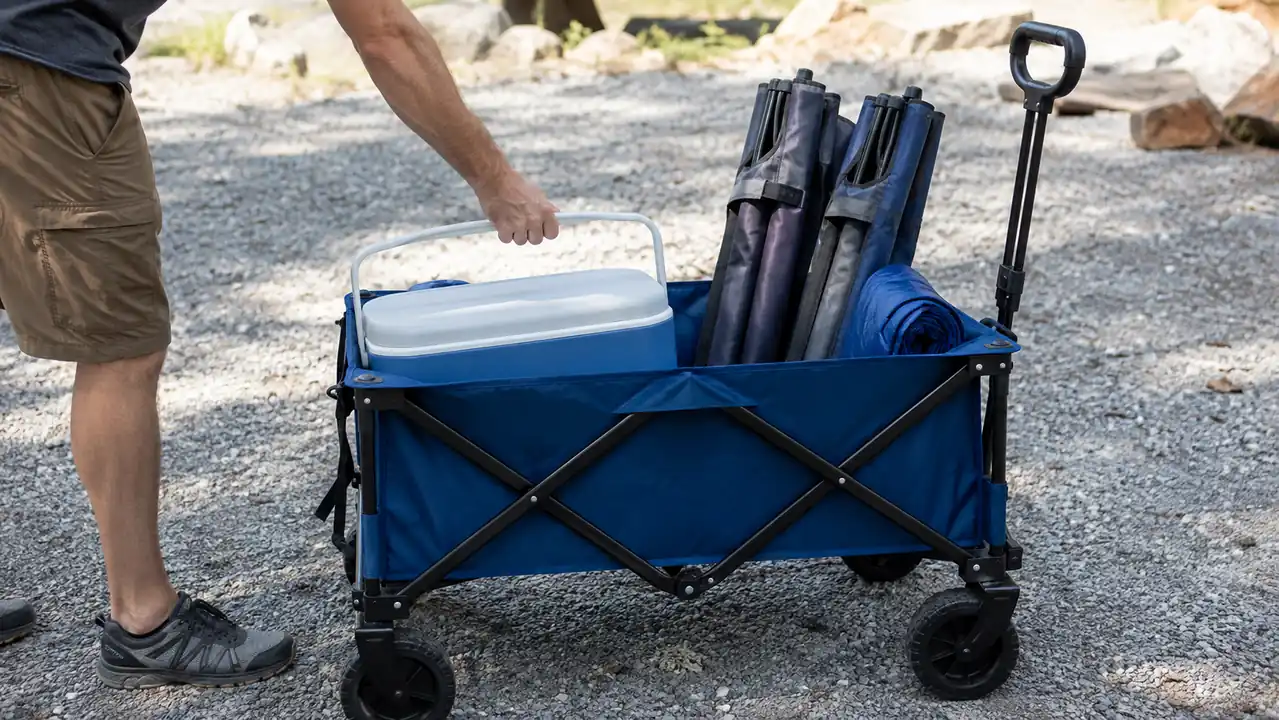
Now the cooler goes in first, dead center over the axle, not shoved against one side rail. A full 48-quart cooler with ice and drinks can run 35 to 45 pounds depending on how much you've packed into it, and that's the anchor everything else gets built around. If I'm bringing a second cooler for food, it goes opposite the drink cooler to balance the load side to side, not stacked on top of it.
Once the heavy items are set and centered, everything else stacks in descending weight, chairs and a tarp next, then lighter things like towels, sunscreen, and snacks on top where they're easy to grab without unpacking the whole wagon. This is the same logic as packing a truck bed for a long drive: heavy and low first, light and accessible last, and the Mac Sports wagon rolls straighter for it.
Step 2: Pick a Cooler That Actually Fits the Wagon Bed
This sounds obvious until you're standing in your garage with a cooler that's a few inches too long for the wagon bed and a wagon that now can't fold its side rails flat around it. Before race day, not the morning of, measure your wagon's interior bed length and width and compare it against your cooler's actual footprint, not just its listed capacity in quarts.
A 48-quart cooler is close to the sweet spot for a wagon this size. It holds a real day's worth of drinks and ice for a small group without eating the entire bed, leaving room for chairs and a bag on either side. Anything past about 65 quarts starts to dominate the bed on a standard folding wagon, and you'll find yourself stacking everything else on top of the cooler lid instead of beside it, which brings back the tipping problem from Step 1.
If you're regularly hauling for a bigger group and need a bigger cooler than the wagon bed comfortably holds, it's worth running the cooler on its own wheels or in the truck bed and reserving the wagon for chairs, the tarp, and everything else. Forcing an oversized cooler into a wagon it doesn't fit usually costs you more in frustration than the single trip it saves.
Step 3: Know Your Track's Bag and Container Rules Before You Pack
This is the step people skip and then get stuck on at the gate. A lot of tracks and grandstands run some version of a bag size limit or a clear-bag policy, especially the bigger national series stops, but the specifics vary a lot from track to track and even from event to event at the same track. Some allow soft-sided coolers of a certain size, some require clear bags only past a certain point, and some don't restrict much at all beyond the obvious weapons and glass rules.
Because there's no single universal rule, the only reliable move is to check your specific track's posted policy before you load the wagon, not assume it matches whatever a buddy told you about a different track. Most tracks post this on their website under tickets or fan guide, and a quick search the night before saves you from repacking in the parking lot or, worse, leaving a cooler in the truck you already paid to bring.
I've started keeping a small mental checklist the week of a race: bag size limit, clear-bag requirement if any, whether outside food and drink is allowed at all, and whether wagons themselves are permitted past the gate or have to be parked at a designated area. That last one matters more than people expect. Some grandstands let you roll a folding wagon right down your aisle, others make you unload at a gate and carry things in by hand from there, and you want to know which one you're dealing with before you've packed for the wrong scenario.
Step 4: Secure the Load for Gravel, Grass, and the Walk In
Once everything's loaded in the right order, it needs to stay that way across whatever surface separates your parking spot from your seats. Gravel lots are the roughest test a loaded wagon faces. Loose gravel catches the wheels and jostles everything inside enough that an unsecured chair or a loose tarp will walk itself right out of the bed by the time you've gone fifty yards. Grass is gentler but has its own issue, soft or uneven patches near fences and drainage dips that can tip a top-heavy load sideways if it's not centered.
A couple of bungee cords or a cargo net across the top of the load solves most of this. I run one bungee front to back over the chairs and tarp, and one side to side, which keeps the top layer from bouncing loose without needing to strap down the cooler itself, since the cooler's weight and low position already keep it from moving much. If you're hauling anything that could blow away in wind, like a lightweight tarp or a stack of paper plates, that's exactly the kind of thing that needs to be under the bungee, not balanced on top hoping the wind stays calm.
Sun and rain both change what goes on top of the load. On a hot, sunny day, I keep a light tarp or towel over anything that shouldn't bake, sunscreen, snacks that melt, a phone charger, and I make sure it's still under the bungee so it doesn't blow off. On a day with rain in the forecast, the same tarp goes over the whole load instead, and I load the cooler and chairs slightly forward of the seat cushions and dry bags so water runs off toward the back instead of pooling where the soft stuff sits. Neither trick takes more than an extra minute, and both save you from arriving at your seats with soaked gear or sunburned snacks.
Step 5: Plan the Walk Back Before You Even Load In
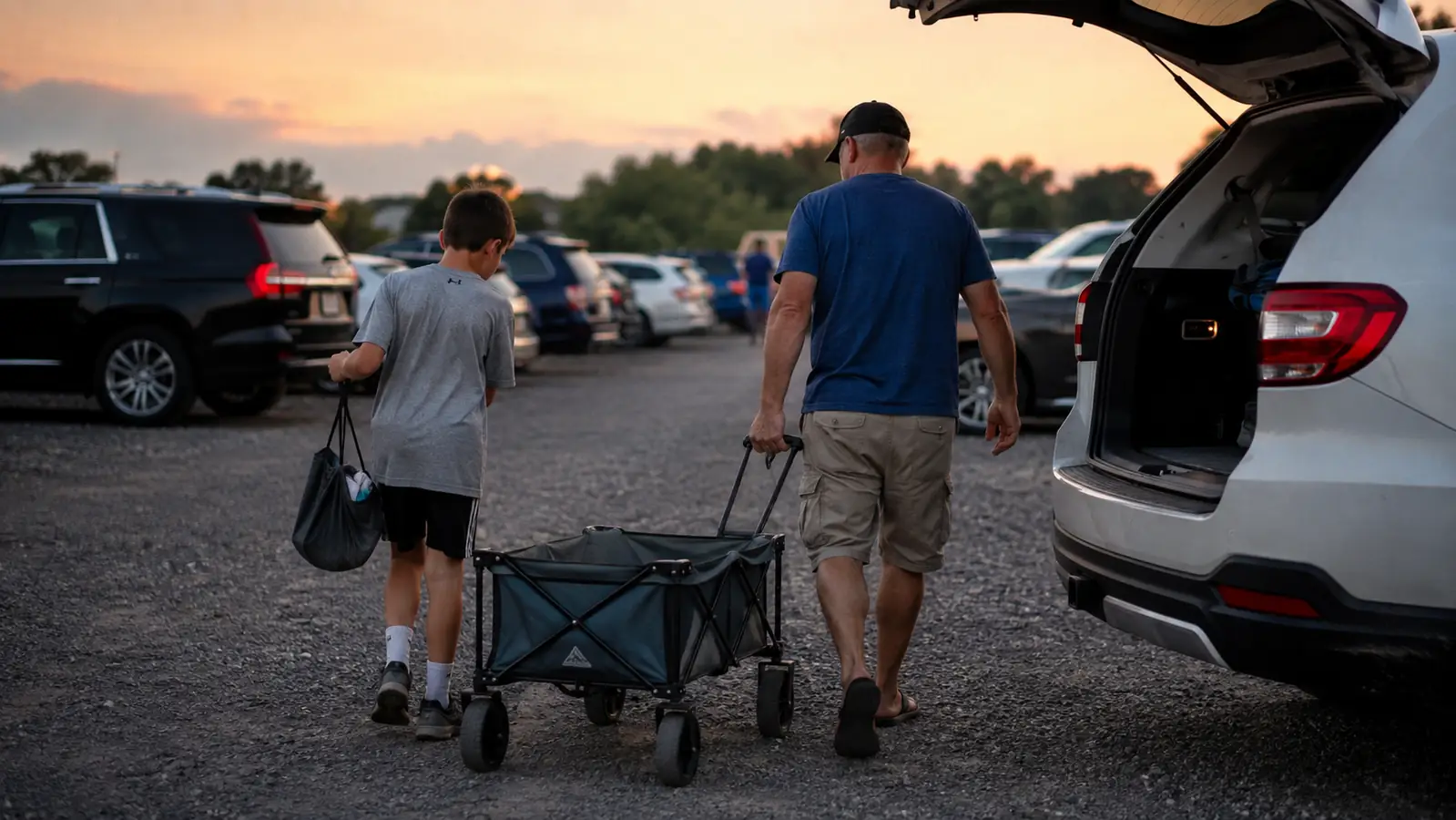
Packing for the trip in is only half the job. The trip back out happens after a full day in the sun, usually with a tired kid, less daylight, and everyone moving slower than they did that morning. My son Sawyer is good for most of a race day, but by the time the checkered flag drops he's done, and the last thing I want at that point is a wagon that's harder to manage than it needs to be.
I try to pack with the exit in mind from the start. Trash and empty cans get consolidated into one bag instead of scattered loose in the bed, so the load actually gets lighter and less bulky over the course of the day instead of turning into a jumble of empty wrappers and wet towels. If Sawyer or Deacon comes along and wears out early, there's almost always room by the end of the day to shift the wagon's remaining light gear to one side and let a tired kid sit on the folded tarp for the walk back, since most of the heavy stuff is long gone by then.
I also leave a headlamp or a phone flashlight easy to reach in an outer pocket rather than buried under everything else, since plenty of race nights end after dark and gravel lots are not where you want to be fumbling around blind while pulling a loaded wagon. A five-second grab for a light beats a slow walk back with your phone's screen brightness as your only guide.
What Else Helps
Beyond the packing itself, a couple of small habits make the whole routine easier over a full season. I keep the wagon loaded with a standing kit, bungees, a folded tarp, and a trash bag, so I'm never digging through the garage looking for straps the morning of a race. I also do a quick check of the wheels and the fold mechanism before the season starts, the same way I'd check a bat grip or a glove's lacing, since a wagon that folds smoothly and rolls straight from the first trip saves you the frustration of fighting the mechanism while you're also trying to keep a cooler balanced. If you want the deeper breakdown of how a wagon like this one actually holds up across a full season of grass and gravel, our full Mac Sports wagon review covers six months of exactly that. And if you're still deciding between a couple of options before you buy, it's worth reading how we compare it to the Timber Ridge wagon, since the deciding factors end up being wheel size and fold mechanism more than raw capacity.
Heavy and centered first, light and accessible last. The wagon that rolls straight is the one packed in that order, not the one packed for convenience.
Pack it once, pull it straight, and stop losing chairs off the top of the load.
A steel frame and a 150-pound capacity give you enough room to pack a cooler, chairs, and a tarp the right way instead of stacking by convenience. Check today's price and current stock on Amazon.
Amazon Check Today's Price on Amazon →