

I picked up the Orange Whip in March, right as I was gearing up for both my rec league baseball season and my regular Saturday golf group, and if you play both sports the way I do, you already know the problem I was trying to solve. My baseball swing is a short, aggressive rotation built to catch up to a live pitch in a quarter of a second. My golf swing is supposed to be long, slow, and rhythmic. For years those two swings fought each other every spring, and my first few rounds after opening day at the batting cage always felt rushed and handsy, right up until sometime around Memorial Day when my body finally remembered how to slow back down. I'm a 14 handicap who plays about once a week from April through October, and I was tired of losing six weeks of decent golf every spring to a timing fight I didn't even have a name for until I started reading about swing tempo trainers.
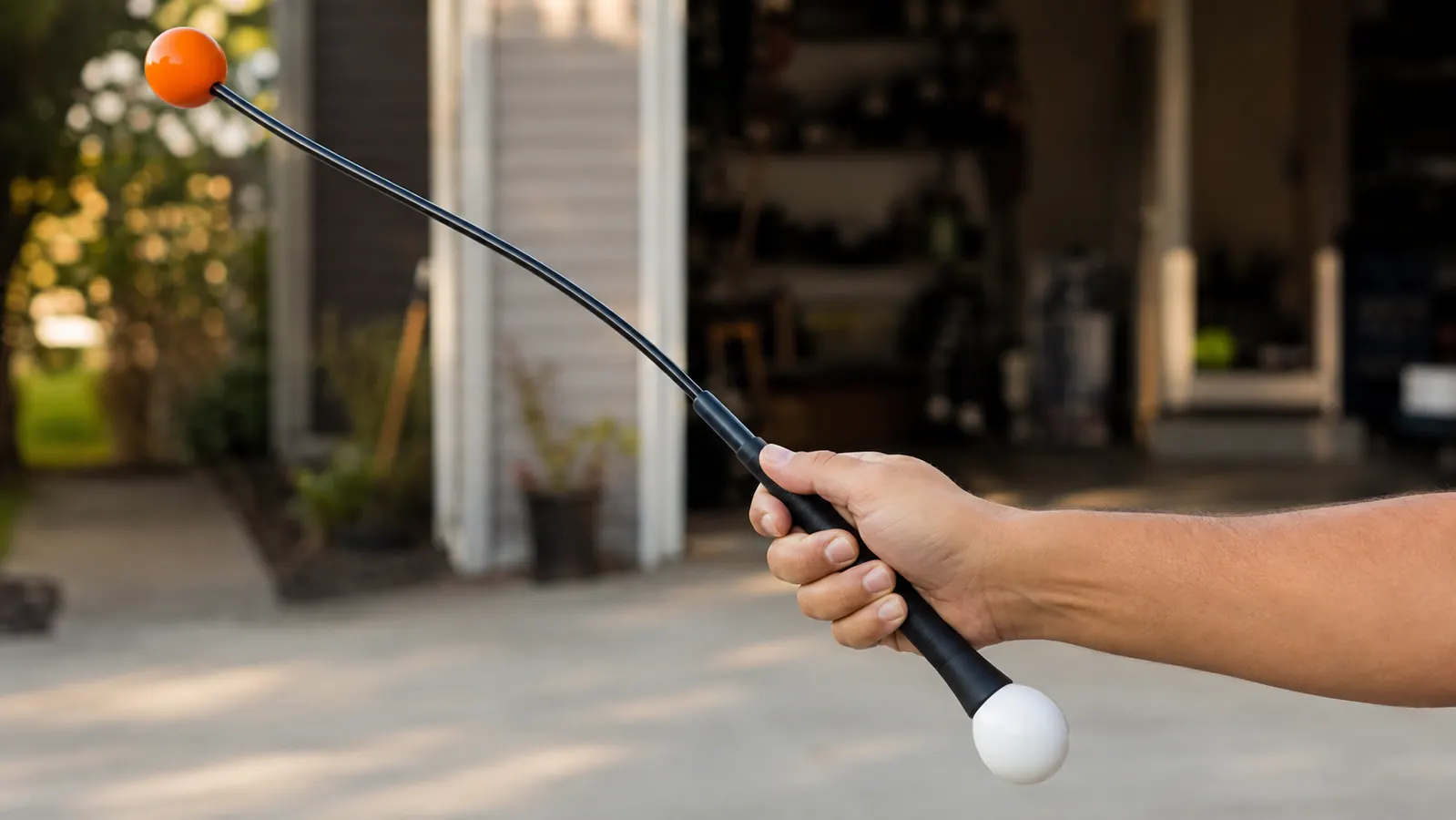
The Orange Whip is a training club, not really a golf club, with a weighted orange ball on a flexible shaft that's built to force your tempo instead of letting you muscle through a swing. You can't swing it fast and get a clean result. The whip section punishes any move that isn't sequenced correctly by throwing you off balance or making the ball wobble instead of tracing a smooth arc. That's the whole idea, and it's exactly why I bought it, specifically to retrain tempo rather than to add distance or fix my grip.
The Quick Verdict
A genuinely effective tempo trainer that solved a real, specific problem for me, though it only works if you actually use it daily rather than leaving it in the garage.
Amazon Check Today's Price →Stop spending the first six weeks of every golf season relearning your own tempo.
If your swing feels rushed and handsy every spring, or you split time between baseball and golf and feel your tempo fighting itself, the Orange Whip forces the sequencing back into your swing in about sixty seconds a day. Check today's price and current stock on Amazon.
Amazon Check Today's Price on Amazon →How I've Used It
I didn't try this for a week and write it off. I used the Orange Whip nearly every day from mid-March through mid-July, which came out to somewhere around fourteen weeks of daily or near-daily swings. Most days it was a thirty to sixty second warmup, ten or twelve slow swings in the garage before I left for work, just enough to feel the ball load and release without thinking about it. On the days I had a round, I'd take it out to the range or the parking lot and run through fifteen or twenty swings before I ever hit a real ball, treating it the same way I'd stretch before a rec league game.
The habit was easy to keep because the thing sits by my garage door where I can grab it in three seconds. That mattered more than I expected. I've owned other training aids that lived in the trunk of my car and never got touched because getting them out felt like a chore. This one became part of my morning the same way brushing my teeth is, and that consistency is honestly most of why it worked.
By week six or so I stopped needing to think about the swings at all. I'd grab it while my coffee was brewing, get through a set without really watching my form, and set it back down. That's actually the point, once the tempo becomes automatic in a low-stakes setting like a garage, it's a lot more likely to survive contact with a real ball on a real course where adrenaline and a scorecard start pulling your hands back toward that quick baseball pattern.
The Baseball Swing vs the Golf Swing Problem
Here's the actual mechanism, as best I can describe it from the outside. A baseball swing rewards quick hands and a short, explosive rotation because you have almost no time to react to a pitch. A golf swing rewards a long, patient backswing and a downswing that doesn't rush to get there. When I play both sports in the same season, my hands default to the baseball pattern on the golf course, especially early in the year, which shows up as a quick, jerky transition at the top of my backswing and a lot of thin contact because I'm getting to the ball before my body has finished turning.
The Orange Whip's flexible shaft and weighted ball make that quick-hands move physically uncomfortable. If you rush the transition, the ball whips ahead of the shaft and the whole thing feels like it's about to fly out of your hands. Slow the transition down and let the weight load properly, and it swings smooth and balanced. It's a crude but effective way of teaching your body the difference between the two patterns without a coach standing over your shoulder saying "slower" forty times.
What Changed Over Four Months
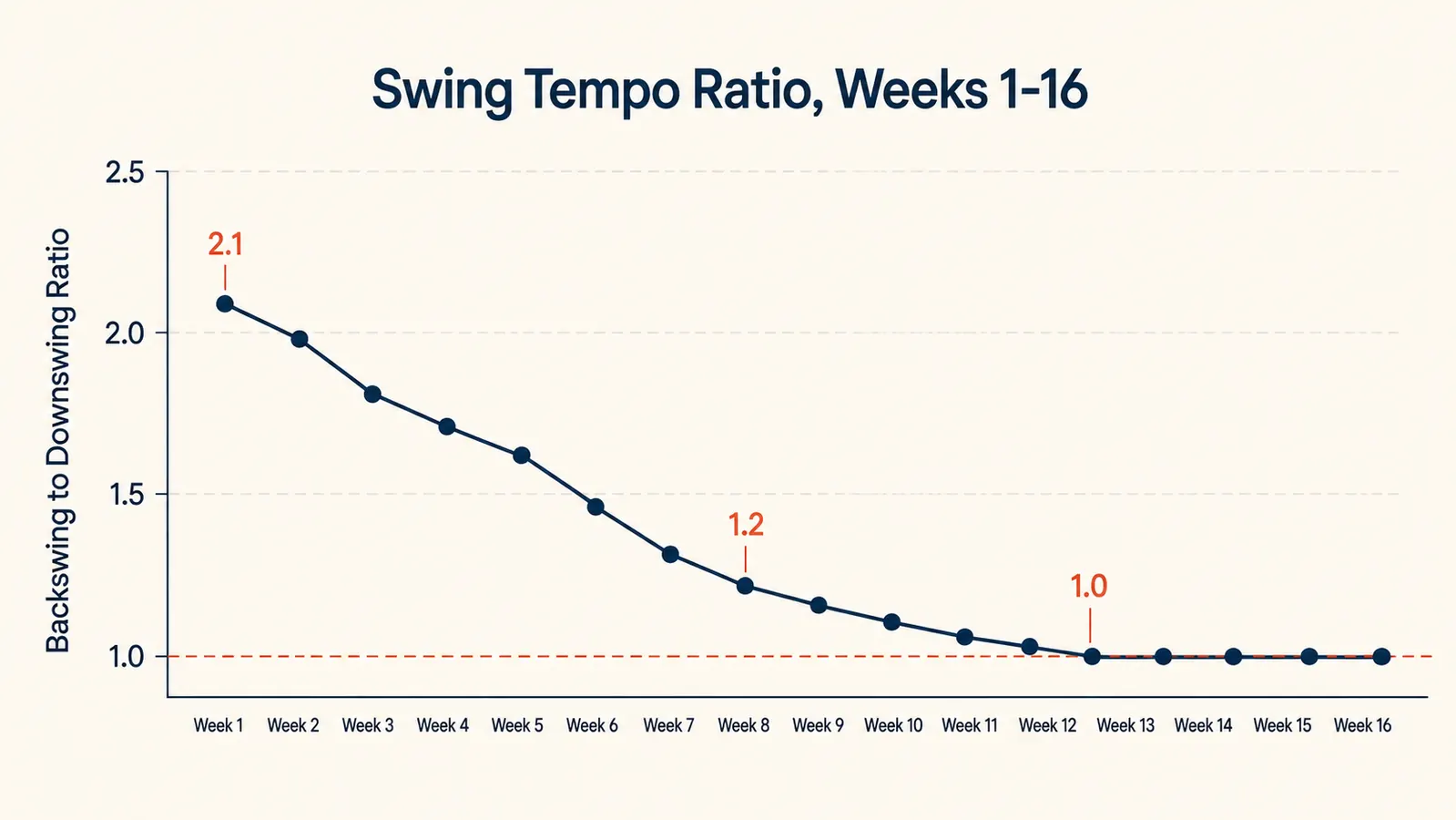
The clearest change was how fast my tempo settled in this year compared to previous seasons. In past years it took me until roughly Memorial Day, call it six or seven weeks into the season, before my swing stopped feeling rushed. This year I noticed the rushed feeling was mostly gone by my third round, somewhere in mid-April, which lines up with about four weeks of daily Orange Whip swings before I ever hit the course. I don't have a launch monitor to give you a hard number on tempo ratio, but the practical result was fewer thin shots and quick, low line drives off the tee, the exact miss I get when my hands are ahead of my body.
Balance was the second thing that improved, and it surprised me more than tempo did. The weighted ball pulls you off your center of gravity if your weight shift is off, and after a few weeks of feeling that pull during warmup swings, I started noticing the same imbalance during real swings on the course, which I'd genuinely never paid attention to before. Fixing it wasn't instant, but by June I was finishing my swing in a stable position more often than not, instead of stumbling forward on anything I hit hard.
Contact quality is harder to measure honestly without tracking every shot, so I'll just say what I noticed. Fewer thin shots off the tee, noticeably fewer, and a handful of rounds in May and June where I hit more fairways than I usually do this early in the season. I want to be careful not to oversell that. I still hit plenty of bad shots. This isn't a swing overhaul, it's a tempo and sequencing tool, and it did that one job well.
The one number I did track loosely was my score for the first five rounds of each of the last three seasons. This year those five rounds averaged about four strokes better than the same stretch the two previous years. I'm not going to pretend a single training aid explains all four strokes, plenty of other things changed too, but the timing lines up closely enough with when I started using the Orange Whip that I don't think it's a coincidence either.
Where It Fell Short
The Orange Whip doesn't do anything for your swing plane, your grip, or your setup. If your miss is a slice caused by an open clubface at impact, this tool isn't going to touch that, and I want to be direct about that because some of the marketing around swing trainers implies they fix everything. Mine didn't. It fixed tempo and, as a side effect, balance. That's the whole list.
It also stopped mattering as much once the baseball season ended in late July. By August my swing had settled into its golf pattern for the year regardless, and I noticed I was using the Orange Whip less, maybe twice a week instead of daily, because the original problem it was solving wasn't as urgent anymore. That's not really a flaw in the product, it's just an honest note that the value is highest during the exact window I bought it for, the spring overlap between two sports with opposite tempo demands.
One more small gripe, the ball end takes up more room than I expected once you try to store it anywhere besides leaning it in a corner. It's not heavy, just awkwardly shaped, and it doesn't come with any kind of bag or cover. If you're tight on space in a closet or a small garage, that's worth knowing before you buy it, even though it never stopped me from using it daily.
The SKLZ Gold Flex I Considered Instead
I looked hard at the SKLZ Gold Flex before buying the Orange Whip, since it's the other name that comes up constantly in the same conversation. The Gold Flex is lighter and has a more traditional golf grip and shaft feel, which some guys prefer if they want something that swings closer to an actual club. I ended up going with the Orange Whip specifically because the weighted ball and more pronounced whip action gave me a stronger, more obvious feedback signal on tempo, which is what I was actually trying to fix.
If your issue is more about clubface control, or you want a trainer that feels closer to a real swing so you can rehearse actual ball flight shapes, I'd understand going the Gold Flex direction instead. But for pure tempo retraining, the stronger, harder-to-ignore feedback from the Orange Whip is what did the actual work for me, and I'd make the same choice again if I were starting over.
What I Liked
- Fixed my early-season tempo problem faster than any previous year without one
- Improved balance and finish position as a clear side effect
- Lives by the garage door, so the daily habit actually stuck
- Simple enough that I never needed instructions after the first try
- Well built, no wear or looseness after four months of near-daily use
Where It Falls Short
- Does nothing for swing plane, grip, or clubface issues
- Value drops once you're not fighting a specific tempo problem
- Feels less like a real golf club than the SKLZ Gold Flex if that matters to you
- Awkward to store, no bag or cover included
- Needs daily use to keep working, not a one-time fix
It didn't fix my golf swing. It fixed the fight between my two swings, and that turned out to be the actual problem.

Who This Is For
This makes the most sense for anyone whose tempo gets scrambled by another sport, another swing pattern, or just a long winter off. If you're a rec league baseball or softball player who also golfs, or if you notice your first few rounds every season feel rushed and off balance, this is a cheap, low-effort fix that you can do in your driveway before work. It's also a reasonable daily warmup for anyone who just wants a repeatable pre-round routine, tempo issues or not.
Who Should Skip It
If your miss is a slice, a hook, or a mis-set clubface at impact, this won't touch it, and you'd be better served by a lesson or a mirror drill for setup. Skip it too if you know you won't actually use it daily. The whole benefit came from the habit, and a training aid that sits in the trunk is just weight in your car.
If your swing feels different every spring, this is the cheap fix worth trying first.
Before you book a lesson to fix something that might just be tempo, spend a month with the Orange Whip and see what changes. Check today's price and current availability on Amazon.
Amazon Check Today's Price on Amazon →