
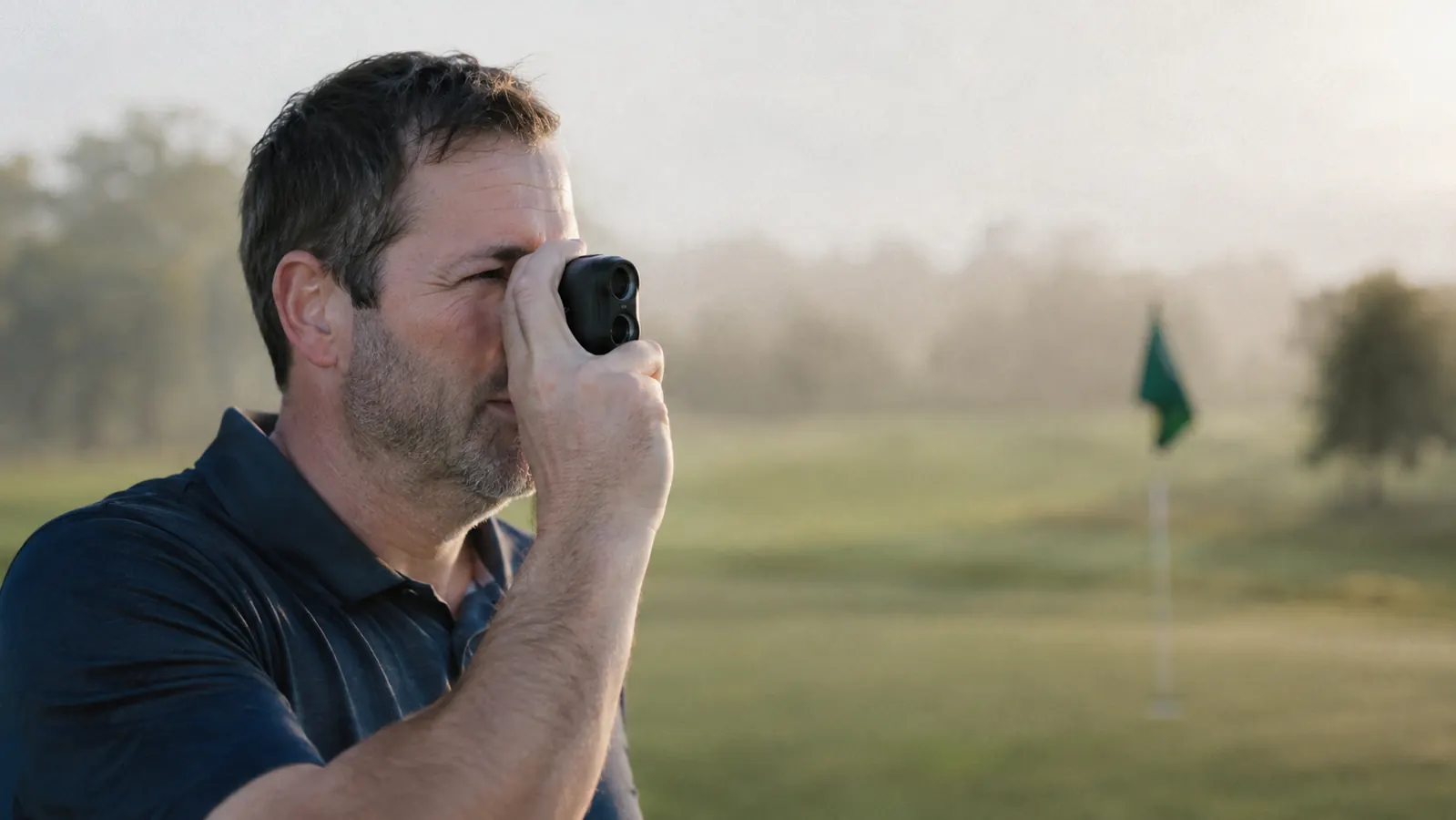
I played baseball and softball long before I ever picked up a golf club, so for years my idea of measuring distance was a coach yelling how far a throw needed to travel. Golf doesn't work that way. Golf hands you a scorecard with a number printed on it from the tee box, and then leaves you completely on your own for every shot after that. For about ten years I played it the way most weekend golfers do: pace off a sprinkler head, squint at a 150 marker that's actually closer to 140, and swing with a club that's wrong two times out of five.
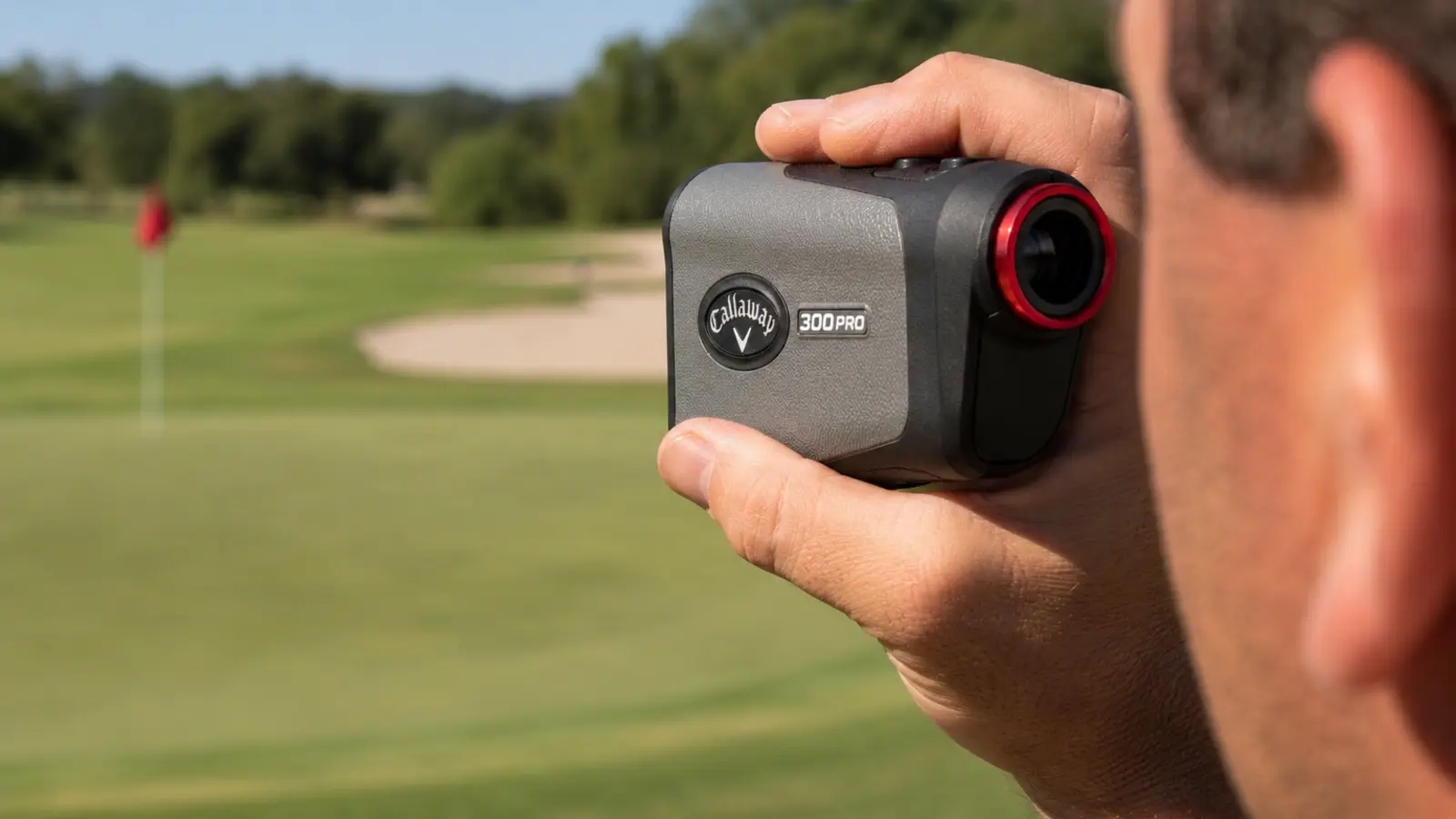
Last spring I finally bought a laser rangefinder, the Callaway 300 Pro, and it changed more about my game than any lesson I'd ever paid for. This isn't a full review. It's the case for why a laser rangefinder belongs in every golf bag, not just the guy who takes the game too seriously.
Guessing yardage is costing you strokes you don't even notice
A laser rangefinder like the Callaway 300 Pro gives you the exact number to the flag, not the number to the sprinkler head near the flag. That difference is worth more strokes than most golfers realize.
Amazon Check Today's Price on Amazon →You stop guessing and start knowing
The single biggest thing a laser rangefinder fixes is the guesswork. My home course has yardage markers every 50 yards, which sounds precise until you're standing 23 yards past one of them trying to do math under pressure. With the Callaway 300 Pro I point, press a button, and get the exact distance to the pin in under a second. No more splitting the difference between two clubs because I'm not sure if I'm at 142 or 158.
It speeds up your pace of play
Nobody wants to be the group holding up the course, and slow play usually comes from indecision, not swing speed. Once I stopped pacing off yardage and started lasering the flag the moment I walked up to my ball, my pre-shot routine got noticeably faster. My regular Saturday group, four of us who've played together for years, finished a full 18 almost 25 minutes quicker the first time I brought the rangefinder along.
It gives you real confidence over trouble
There's a hole on my course with water short and a bunker long, and for years I played that approach shot scared, which is the worst way to play any golf shot. Knowing the laser-confirmed number to the front edge, the pin, and the back edge lets me commit to a club instead of hedging between two of them. Committed swings go straighter than hedged ones, every time.
Slope mode tells you what the number actually means
Flat number and playing number are two different things once elevation gets involved, and my course has a back nine that climbs and drops more than the scorecard lets on. The Callaway 300 Pro has an external slope switch that adjusts the yardage for uphill and downhill shots, so the number I get already accounts for how far the ball will actually carry. Tournament rounds require the slope switch off, which the unit makes easy to flip.
It makes practice rounds actually useful
I used to walk a new course and just guess my way around it, which meant the practice round taught me almost nothing I could use later. Now when I play somewhere new, I laser every landmark on the way, front bunkers, the tree line off the tee, the layup spot before a creek, and write the real numbers in my yardage book. The next time I play that course, I'm not guessing anymore.
It reads clearly even in bright sun
A rangefinder that's hard to read at high noon is close to useless, since that's when most weekend rounds happen. The display on the Callaway 300 Pro stays legible in full sun, which matters more than it sounds like it would. I've held cheaper units before that washed out completely on a bright afternoon, forcing you to cup your hand over the eyepiece like you're trying to read a phone screen at the beach.
It helps you make smarter go-for-it decisions
Every golfer eventually stands over a par 5 wondering if they can clear the fairway bunkers and reach the green in two. That decision is a lot easier with a real number instead of a hopeful guess. Knowing I'm at 238 to clear the trouble versus 218 changes whether I pull driver off the deck or lay up short with an iron, and it's saved me from more than a few blown-up holes since I started carrying one.

It pays for itself in strokes over a season
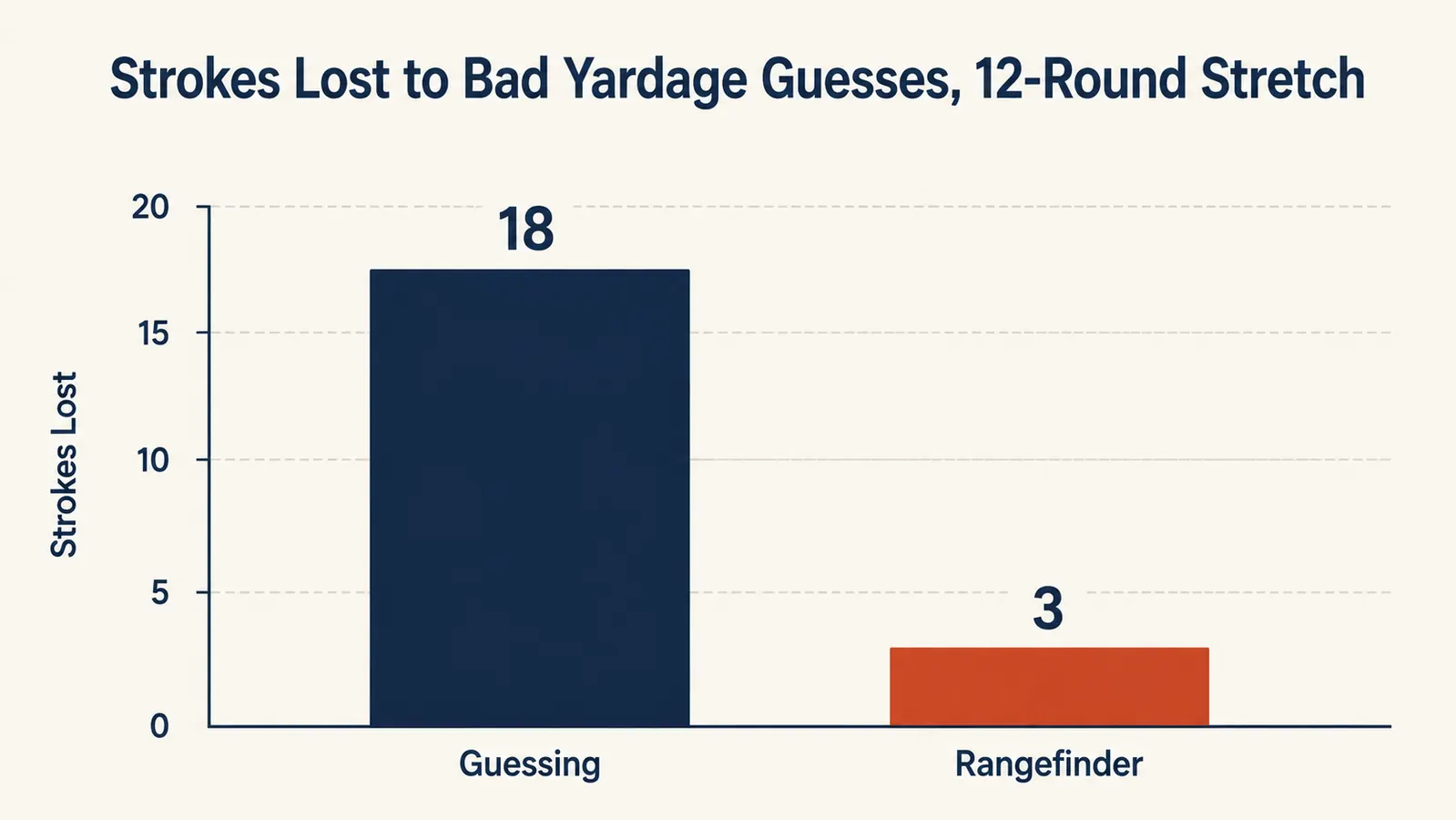
A laser rangefinder isn't cheap, but neither is a season of bad club selection. I track my rounds loosely on an app, and the strokes I was losing to wrong-club approach shots before I bought mine were adding up to more than the unit's current price by midsummer. My son Jonah, who's started playing with me on weekends, picked up on the yardage numbers faster than I expected once he saw me use it, and it's become part of both our routines.
It settles the friendly bets fairly
My regular group plays closest-to-the-pin games on the par 3s, and for years those bets got settled by eyeballing it, which always led to somebody claiming they were closer. A laser rangefinder ends that argument in seconds. Point it at each ball, get the exact yardage back to the pin, and the closest number wins. It's a small thing, but it's made our Saturday games noticeably less argumentative.
It's built to survive an actual season in a golf bag
A rangefinder that dies on the 9th hole or cracks after living in a bag pocket all summer isn't worth carrying. Mine has ridden in the same side pocket since last spring, through rain delays, a couple of drops on cart paths, and one memorable tumble off a bag rack, and it still reads accurately and holds a charge on the original battery. That kind of durability is the difference between a tool you actually use and one that ends up in a drawer.
What I'd Skip
I'd skip any rangefinder that doesn't have some form of slope or elevation adjustment, and I'd skip the ultra-budget models that skip a good lens entirely, since a blurry or washed-out display defeats the whole purpose. I'd also skip buying one right before a tournament round without practicing with it first. Learning where the buttons are and how fast you can get a reading takes a few rounds, and you don't want to be fumbling with a new gadget while your group waits on you.
I didn't buy a laser rangefinder to shoot lower scores overnight. I bought it to stop lying to myself about how far away that flag actually is.
Ready to stop guessing on every approach shot?
The Callaway 300 Pro is the rangefinder I've carried all season, slope switch and all. Check today's price before your next round.
Amazon Check Today's Price on Amazon →