
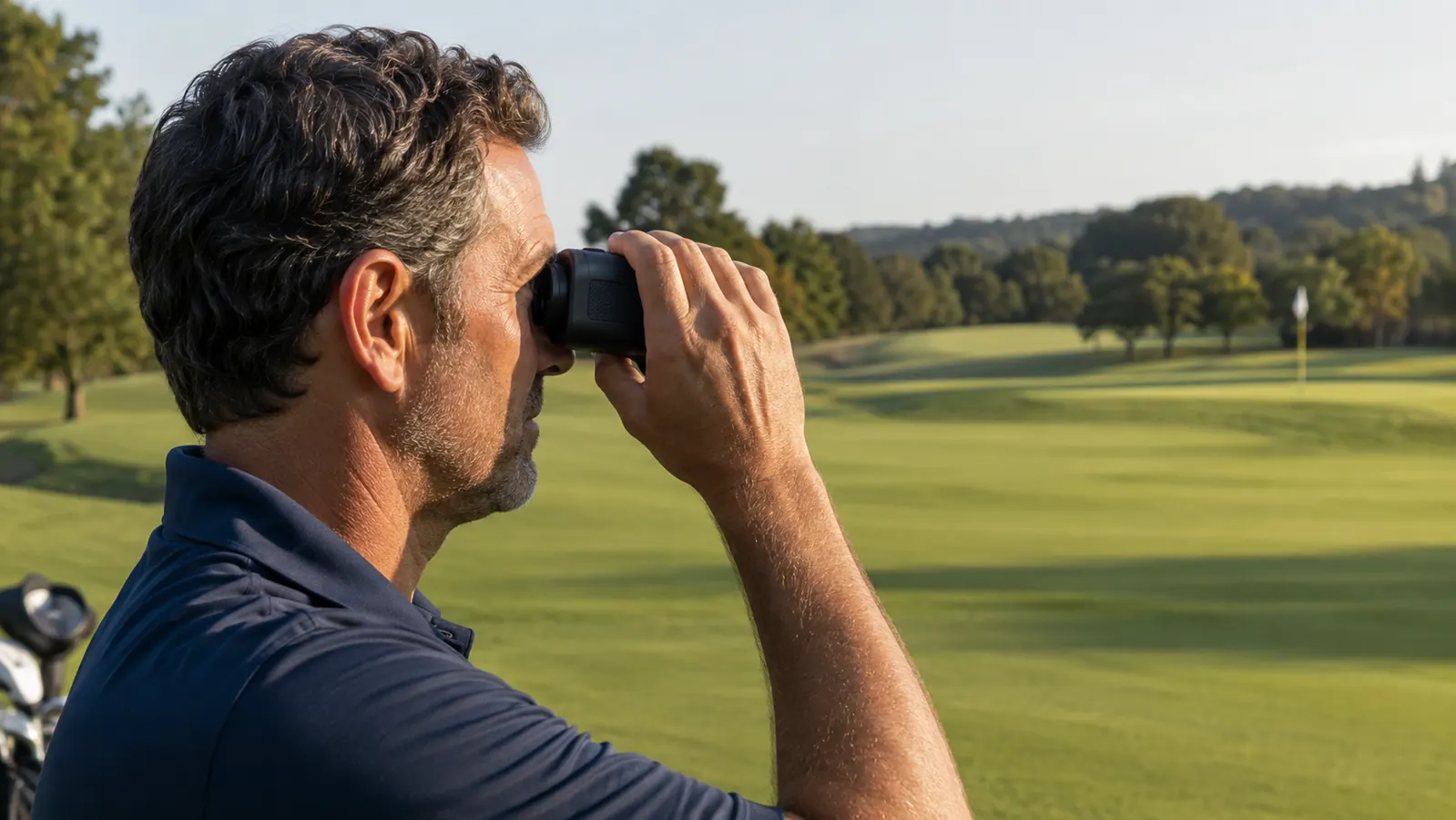
I picked up the Callaway 300 Pro in April, right after my home course reopened for the season, because I'd spent the previous summer guessing yardages off cart path markers that were wrong as often as they were right. I'm a 14 handicap who plays about once a week from April through October at a municipal course outside town, plus two buddy trips a year to courses I've never seen before. Guessing yardage cost me strokes on unfamiliar holes more than any other single thing in my game, so I finally bought a real laser rangefinder instead of relying on my phone's GPS app. Six months and somewhere around 26 rounds later, here's what the Callaway 300 Pro actually did for my scorecard and where it let me down.
The unit I bought is the standard 300 Pro with the external slope switch, not the tournament-legal version without slope. That distinction matters and I'll come back to it, because it's the single most important thing to get right before you buy this rangefinder, or honestly any slope rangefinder.
The Quick Verdict
A genuinely accurate, fast-locking rangefinder that earned a permanent spot in my bag. The slope switch is the one feature you have to manage carefully if you ever play in a rated event.
Amazon Check Today's Price →Stop guessing yardage off a cart path sign that's been wrong all season.
If you're still eyeballing distances or waiting on a slow GPS app to load, the Callaway 300 Pro locks a flag in about a second and gives you a real number, not an estimate. Check today's price and current stock on Amazon.
Amazon Check Today's Price on Amazon →How I've Used It
I didn't just test this thing for a weekend and write a review off first impressions. I used it every single round from late April through the end of October, which at roughly once a week plus a couple of makeup rounds after rainouts comes out to about 26 rounds, plus a nine-hole twilight round most Wednesdays that I stopped bothering to count separately after a while. That's somewhere north of 30 total times I pulled it out of the bag.
The first real test was my home course, which I know well enough to guess yardage within five yards on most holes just from memory. That gave me a built-in sanity check. On the holes where I already knew the number from playing it 40 times, the rangefinder matched what I knew almost every time, which told me early on that the unit itself was trustworthy before I ever took it somewhere unfamiliar.
The real value showed up on the two buddy trips, one in June to a course in the hills that had blind approach shots on at least four holes, and one in September to a coastal course where the wind made club selection guesswork even without the distance question. On both trips I was playing holes I'd never seen, and having an exact number to the flag instead of a guess off a sprinkler head took real strokes off my second-shot decisions. I know that because I actually tracked greens in regulation for those two rounds specifically and compared them to my average, and both rounds came in above my season average.
Accuracy: Does It Actually Lock the Flag
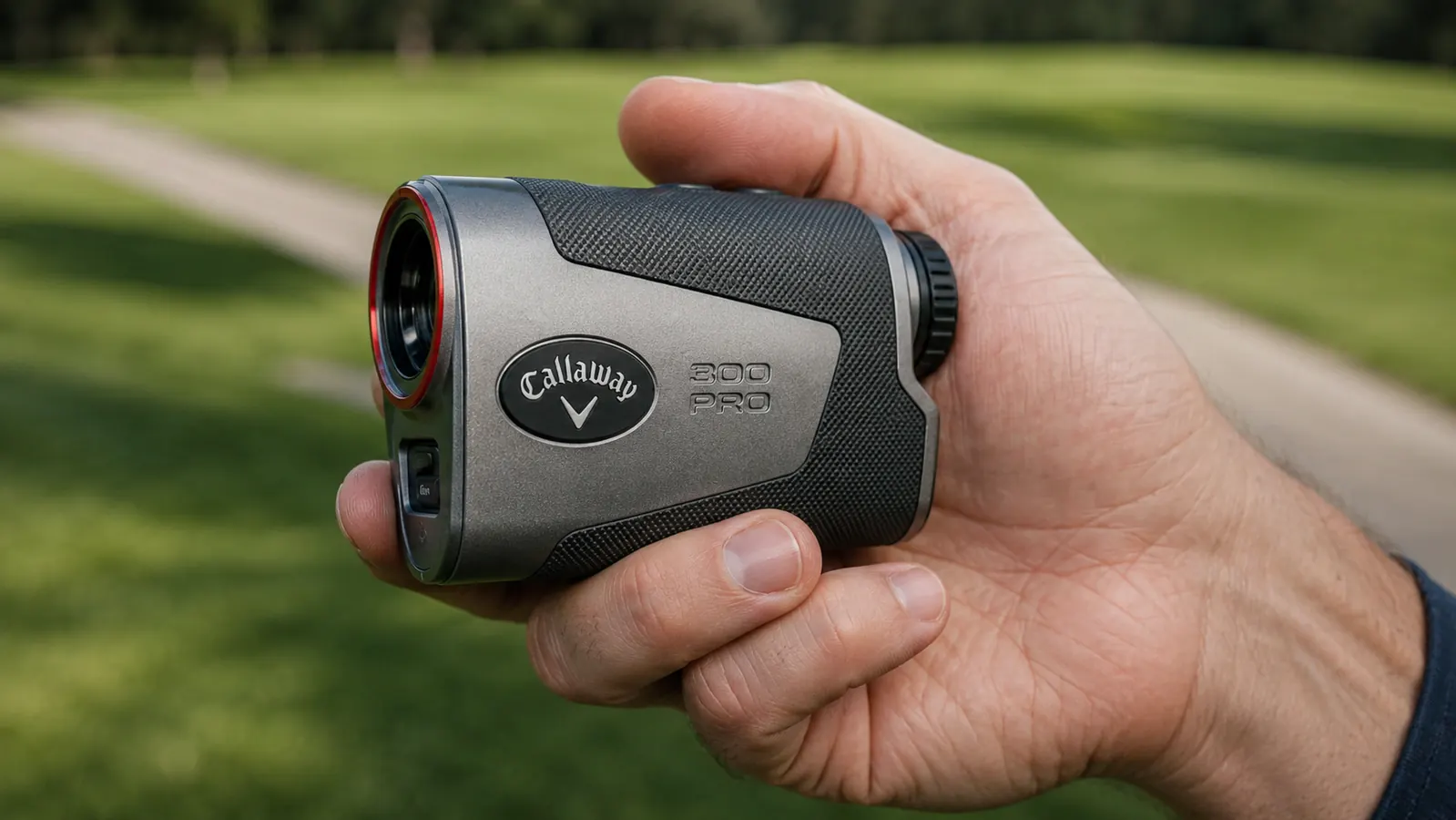
This was my biggest question going in, because I'd read complaints online about cheaper rangefinders locking onto trees or bunkers behind the green instead of the flag itself. The 300 Pro uses Callaway's Precision Targeting System, and in practice it locked the actual flag, not the background, in almost every situation I tried it in. The unit gives you a short vibration when it locks a target, which sounds like a small thing but matters a lot on a bright day when the display is harder to read.
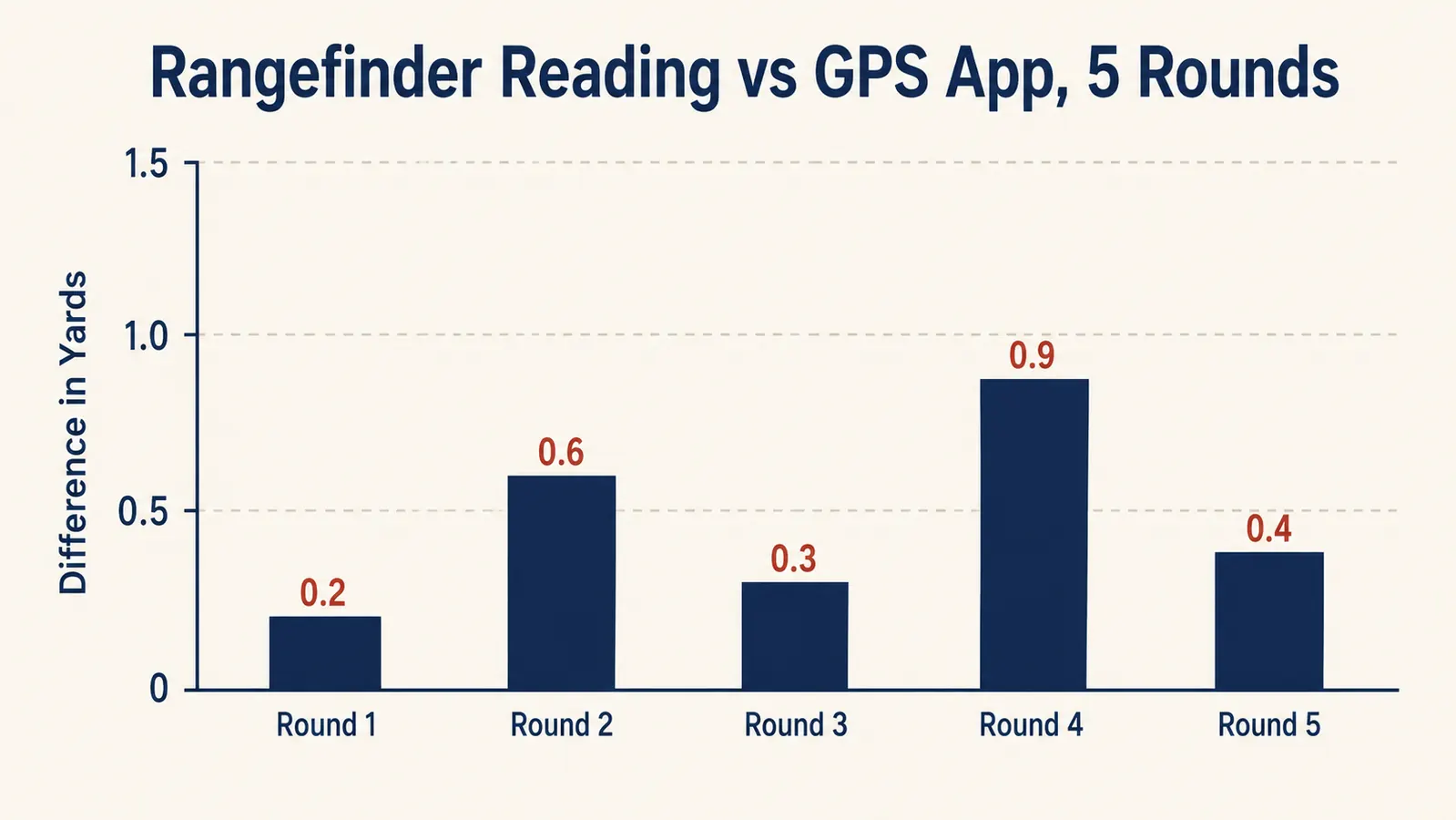
I ran a rough comparison for five rounds in July and August where I checked the same shots against the GPS app on my phone, just to see how far apart the two numbers landed. The rangefinder and the GPS app agreed within a yard or two almost every time, which isn't surprising since GPS apps are themselves pretty accurate on a well-mapped course, but it confirmed the laser wasn't drifting or giving me bad numbers on trickier sightlines like elevated greens or flags tucked behind bunkers.
Where it struggled a little was flags more than about 220 yards out with anything busy in the background, like trees close behind the green. Twice this season I had to re-aim and re-fire to get a clean lock instead of grabbing a background object. That's a known limitation of laser rangefinders generally, not something unique to this model, and it happened rarely enough that it didn't change how I use the thing round to round.
The Slope Switch: Useful, and the Thing You Have to Manage
The external slope switch is a small physical slider on the side of the unit that turns Callaway's slope-adjusted distance on or off. With slope on, the display shows an adjusted yardage that accounts for elevation change, uphill or downhill, which is genuinely useful information for club selection on a hilly course. My hill-country buddy trip in June is where this feature actually earned its keep. On a downhill par 3 that played 165 yards flat but closer to 152 effective with the drop, the slope reading told me to take one more club down than the flat number would have, and I hit the green instead of going long like I usually do on downhill shots.
Here's the catch, and it's the reason I called this out as the most important thing to understand before buying. Rangefinders with slope function are not legal for tournament play under USGA and R&A rules unless the slope feature is disabled, and even then some tournament committees specifically ban any rangefinder that has slope capability at all, switch or no switch. I play mostly casual rounds so this has never cost me a stroke, but a buddy on my September trip plays in a men's club championship every year and specifically avoids any rangefinder with a slope switch for that reason, even though the switch can be flipped off. If you play in rated club events or tournaments, check your specific tournament's local rules before you bring this into a scoring round. Callaway does sell a version of the 300 Pro without the slope switch built in at all, which is the safer buy if competitive rounds are a real part of your golf.
Battery Life and Build Quality Over a Full Season
I put one CR2 battery in this thing in April and it lasted the entire season through late October without a replacement. Callaway's spec sheet claims thousands of measurements per battery, and based on roughly 30 rounds averaging maybe 15 to 20 flag reads per round, I put somewhere between 450 and 600 measurements through it and never saw a low-battery warning. That's a real strength compared to a device that eats through batteries every month, and it's one less thing to think about mid-round.
The build itself held up fine to the way I actually treat golf equipment, which is to say not always gently. It rode in the cart's cupholder more often than the padded case Callaway includes, took a drop onto a cart path once in July when I fumbled it getting out of the cart, and has a couple of light scuffs on the housing to show for it. No functional issues from any of that. The rubberized grip on the sides stayed tacky even on sweaty August rounds, which matters more than it sounds like it should when you're gripping it one-handed while also holding a club.
The one gripe I have on build quality is the eyepiece diopter adjustment, the small ring you twist to focus the display to your eyesight. Mine has loosened slightly over the season and drifts out of focus if the unit sits in a bag pocket where it can get bumped. It's a five-second fix to re-dial it in, but I now check it before every round instead of assuming it's still set from the last time.
What I Considered Instead
Before buying this, I looked hard at a Bushnell model a golfing buddy of mine has used for three seasons, mainly because he's never had a single complaint about it. I haven't put six months into that unit myself so I won't pretend to review it firsthand, but between the two of us comparing readings side by side on a handful of holes this summer, they landed within a yard of each other consistently. If you're deciding between the two, the honest answer is that both are accurate laser rangefinders from established brands and the decision probably comes down to grip feel, magnification, and whether you want the slope feature built in or need it removable. I've written up a closer side by side if you want the full breakdown of how it compares to the Bushnell Tour V6 Shift.
I also thought about just sticking with my phone's GPS app, since it's free and I already had it. The GPS app is fine for a general sense of distance to the center of the green, but it doesn't give you a precise number to the actual flag position, which moves daily, and it's noticeably slower to open and load on a course with spotty signal. Once I got used to a one-second laser lock, going back to waiting on an app felt like a step backward every time I tried it.
What I Liked
- Locks the actual flag reliably, not the background, in almost every situation this season
- One CR2 battery lasted a full six-month season with no low-battery warning
- Slope-adjusted yardage genuinely helped club selection on hilly holes
- Rubberized grip stayed usable even on sweaty summer rounds
- Held up to normal cart-and-bag wear including one accidental drop
Where It Falls Short
- Slope switch makes it a non-starter for some tournament and club championship play unless disabled or removed
- Occasional trouble locking flags past 220 yards with a busy background
- Eyepiece diopter ring loosened over the season and needs a quick re-check before rounds
- Current price is a real jump over a basic non-slope rangefinder for a casual player who never needs slope
That downhill par 3 in June is the round that sold me. One extra club down off the slope reading, and I hit the green instead of sailing long like I always do on that hole.
Who This Is For
This rangefinder makes the most sense for a golfer who plays regularly enough to justify the cost per round, and who plays courses with real elevation changes where the slope feature has something to work with. That's basically me: a once-a-week player who takes a couple of trips a year to courses I don't know, where an exact number to the flag actually changes club selection instead of just confirming what I already guessed. If you play hilly terrain regularly, the slope switch alone is worth the upgrade over a flat-yardage-only unit. I'd also point it at anyone who's tired of a GPS app's slow load times or imprecise center-of-green numbers and wants a fast, accurate lock every single time.
Who Should Skip It
If you play mostly flat courses where elevation barely factors into club selection, the slope feature isn't going to earn its keep and you might be better served by a cheaper, non-slope laser rangefinder that costs less for the same core accuracy. I'd also skip this specific model if you play in USGA-rated tournaments or a club championship regularly, since the built-in slope switch, even switched off, disqualifies it under some local rules where a non-slope model would be a non-issue. And if you're an occasional golfer who plays a handful of rounds a year, the cost is hard to justify next to just using a free GPS app and accepting a rougher estimate. This is a tool for someone who plays often enough that shaving strokes off approach shots actually shows up in a season-long scoring average, not someone playing four rounds a summer.
A full season in, this is the one club-selection tool I never leave in the car.
If you're ready to stop guessing yardage and start hitting the number the flag actually sits at, the Callaway 300 Pro is worth checking at today's price on Amazon.
Amazon Check Today's Price on Amazon →