

The first time I brought my son Sawyer to a short track, I underestimated the noise by a lot. We had general seats about six rows up from the front stretch, and when the field took the green flag I felt the sound in my chest before I registered it in my ears. Sawyer, who was ten at the time, clapped his hands over his ears and looked at me like I'd betrayed him. I had exactly one pair of foam plugs in my truck's glove box, and we split them, which meant neither of us had real hearing protection for the rest of the night.
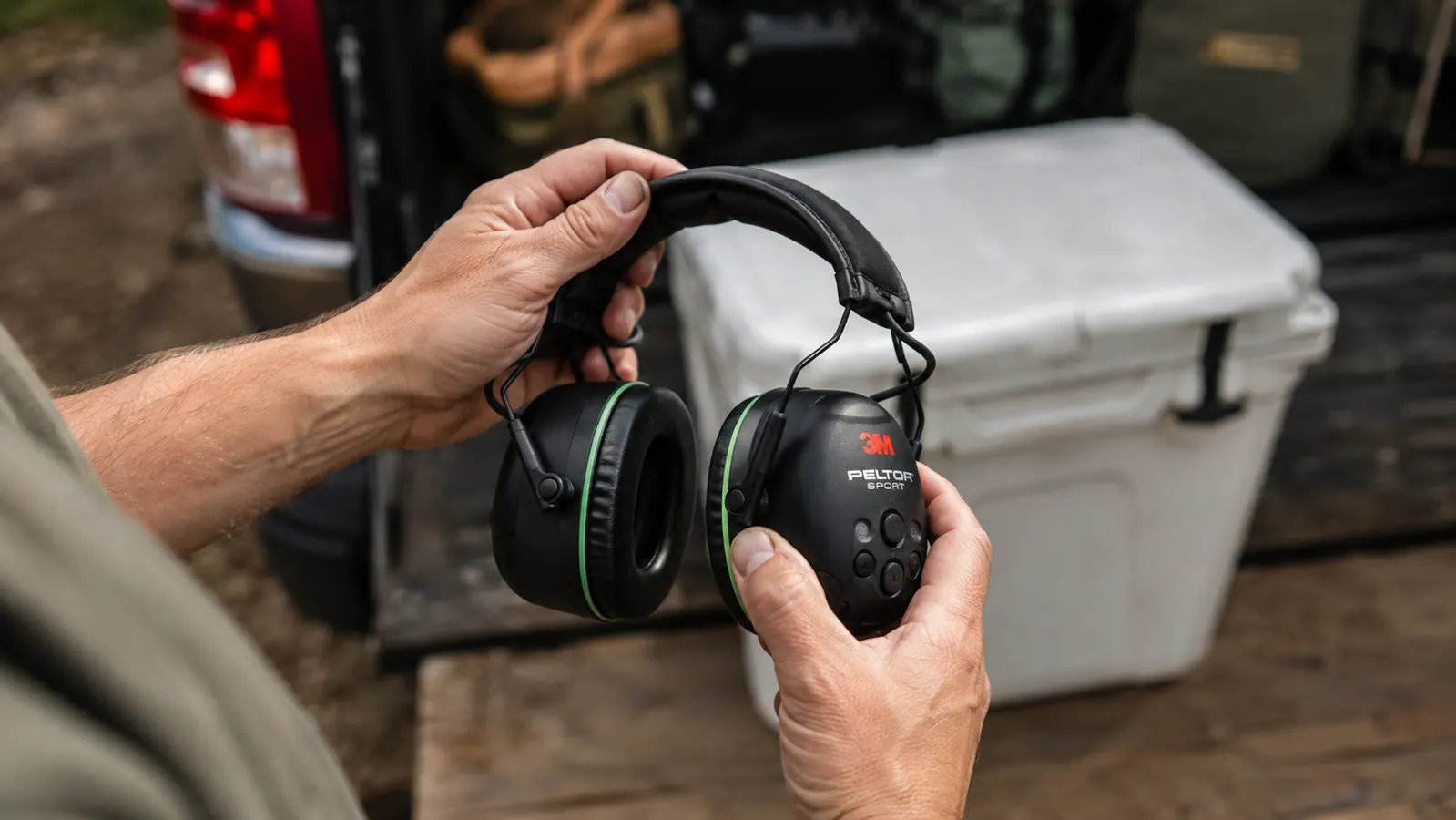
That trip is why I now own a pair of Peltor Sport Tactical 500 electronic earmuffs and bring them to every race, plus a spare set of foam plugs in the bag for whoever forgot theirs. A short track or a national-series stop is loud in a way that's hard to picture until you're standing at the fence during hot laps. This guide walks through how to actually pick hearing protection for a day at the track instead of grabbing whatever's cheapest at the gate, and where a set like the Peltor fits into that decision.
I only get to a couple of races a year between coaching my kids' teams and my own weekend rounds of golf, so when I do go, I want the gear sorted ahead of time instead of scrambling at the gate. That's the same reasoning I use buying any piece of gear I don't touch often: fewer trips means it's worth spending the ten minutes to actually understand what I'm buying, rather than grabbing whatever's cheapest and hoping it works out.
Don't find out how loud a green flag is with your bare ears
The Peltor Sport Tactical 500 carries a manufacturer-rated 25 dB NRR, folds down for the truck, and pairs over Bluetooth so you're not choosing between hearing your buddy and hearing the field.
Amazon Check Today's Price on Amazon →Step 1: Start With the NRR Number, Not the Marketing Copy
Every pair of hearing protection sold in the US carries a Noise Reduction Rating, a lab number set by the manufacturer under EPA testing rules. It's a single figure, like the Peltor's 25 dB, meant to describe how many decibels the device can theoretically knock off a given sound level under ideal, sealed conditions. It is not a promise about what happens on your particular head at your particular seat, and I'd rather you know that going in than get it from a review that oversells it.
General guidance from groups like NIOSH and OSHA (written for workplace noise, but the numbers translate fine to a grandstand) points to sustained exposure above roughly 85 dB as the range where hearing protection starts to matter, and a lap field at speed can run well past 100 dB at the fence. I'm not a doctor and this isn't medical advice, just context for why the NRR number on the box is worth reading instead of skimming past.
What I can tell you from wearing them is what a 25 dB-rated set actually sounds like in use: engine roar drops from a physical, chest-level pressure to something closer to a loud fan running nearby. Announcer chatter and crowd noise around me get noticeably duller. It's a real, felt difference, and it's the reason I don't take my earmuffs off between heats anymore.
One thing worth knowing before you compare NRR numbers across brands: two ratings don't simply add together if you stack a plug under a muff. Manufacturers generally note that combining protection gets you something closer to the higher number plus a modest handful of decibels, not a straight sum. I mention it because I've seen people assume doubling up on gear doubles the reduction, and that's not how the spec sheets describe it.
Step 2: Decide Between Over-Ear Muffs and Foam or Silicone Plugs
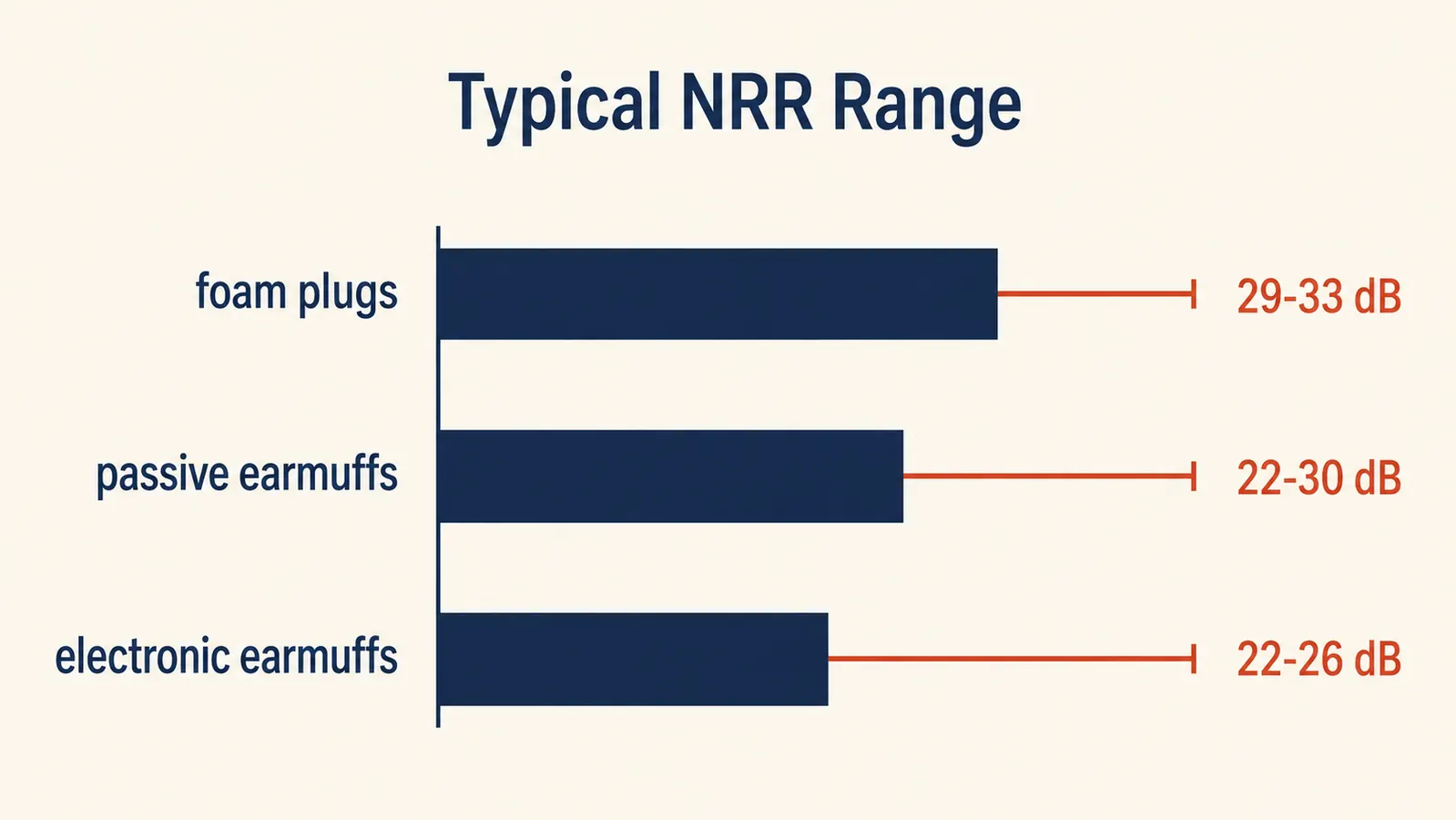
Foam plugs pack the highest NRR numbers you'll typically find, often 29 to 33 dB, and they're cheap enough to keep a dozen pairs in the truck. The tradeoff is fit. A foam plug only works at its rated level if it's rolled thin and seated deep in the canal, and most people, myself included on a rushed night, don't do that consistently. Half-seated foam plugs can perform closer to a plain pair of earmuffs than their box number suggests.
Over-ear muffs like the Peltor trade a little peak NRR for consistency. You put them on, you can see and feel that the cushion is sealed around your ear, and there's no guesswork about insertion depth. For a full day where you're eating, drinking, talking, and taking them on and off between races, I've found that consistency matters more than chasing an extra couple decibels on paper.
Clamping force and weight matter more than most first-time buyers expect. A heavier muff with a tight headband can leave a genuine headache by the third or fourth heat of the night, especially if you also wear glasses or sunglasses under it. The Peltor's headband padding and the moderate clamping force are a big reason I reach for it over an older, cheaper set I used to own that felt fine for twenty minutes and miserable by lap fifty.
Step 3: Size It for Whoever's Actually Wearing It
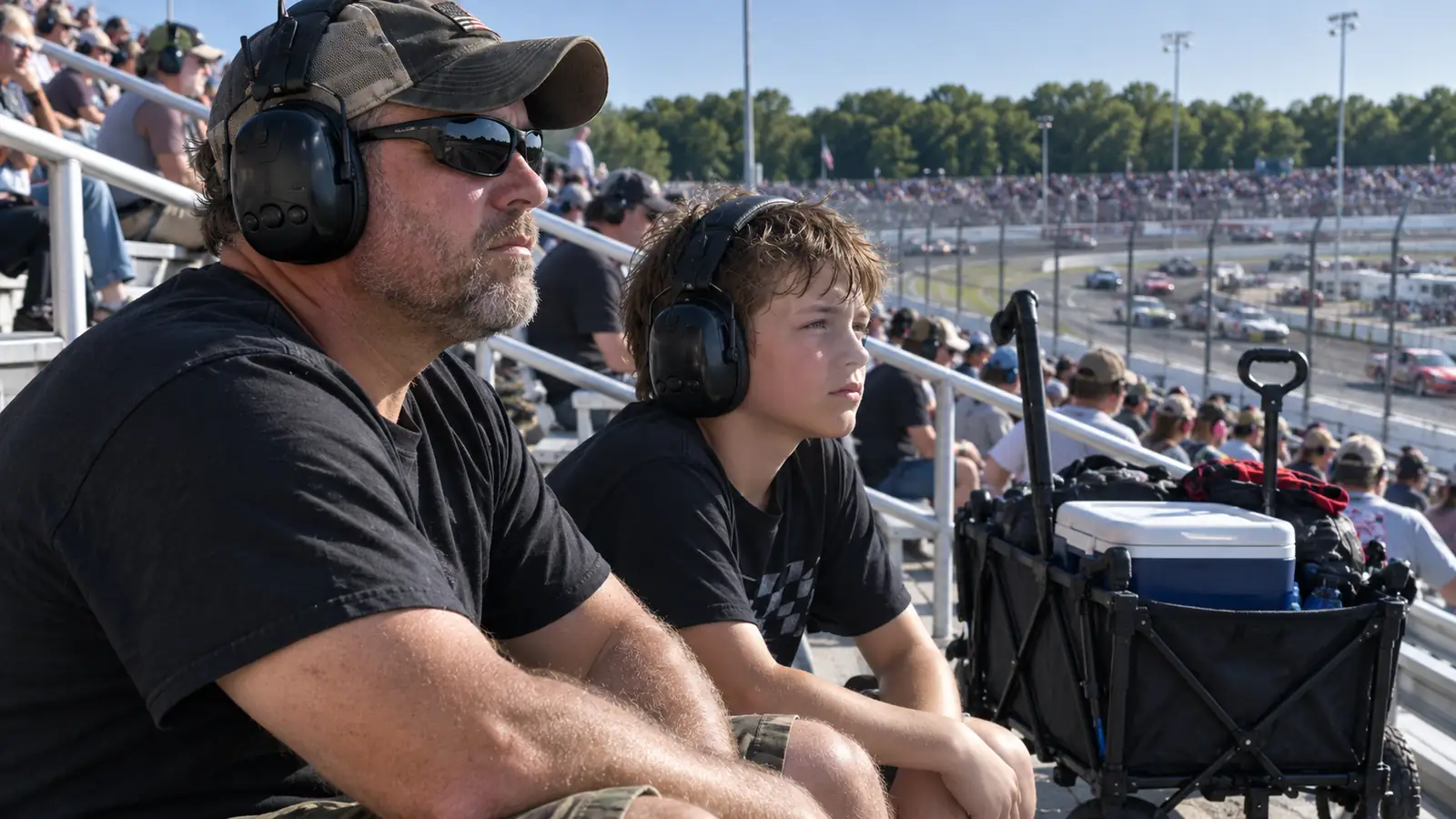
An adult-sized headband on a kid's head is a common mistake I made myself before I knew better. My nephew Deacon, who's thirteen and would rather be behind the plate than at a race, came with us last summer, and the first pair of earmuffs we handed him sat so loose that light was visibly getting past the cushion at his temples. A loose seal defeats the rating regardless of what number is printed on the box.
The Peltor's headband adjusts a wide range and the cushions are soft enough to seal on a smaller head, but I still check the fit by hand before the green flag rather than assuming it's set right. For a genuinely small kid, foam plugs sized down, or a kid-specific muff, will seal more reliably than an adult set cranked to its smallest setting.
A quick fit check that works for a kid or an adult: press each cup flat against the head with your palm and listen for a change in how muffled the world sounds. If pressing it flush makes an obvious difference, the everyday fit isn't fully sealed and the headband needs adjusting, or the cushion needs replacing. I do this check with Sawyer and Deacon both before we ever get near the fence, since a growing kid's head size changes season to season and last year's setting isn't this year's setting.
Step 4: Decide If You Want Radio or Bluetooth Features
Passive earmuffs just block sound. Electronic ones, like the Tactical 500, add a microphone and speaker in each cup so ambient conversation and lower-level sounds pass through nearly normally while the earmuffs still clamp down hard on sudden loud noise. That's the difference between sitting through an entire race in total isolation and being able to talk to whoever's next to you without lifting a cup off your ear.
The Bluetooth pairing is the feature I use the most, not for music, but for streaming the track's scanner audio or the broadcast commentary straight from my phone through the earmuffs at a level the app lets me set independently from the ambient pass-through. If you're the type who rents a scanner at the gate to follow driver radio, check that the model you're buying actually supports audio streaming and not just a phone call function, since some "Bluetooth" earmuffs on the market only handle calls.
It's worth separating this from noise-canceling headphones, which work by actively generating an opposing sound wave and are built for steady tones like an airplane cabin, not the sudden, sharp transients of engines and exhaust. Electronic earmuffs like this one work more simply, by physically blocking sound and then piping controlled ambient audio back in through the speakers. I've also had them out in a light rain at a spring race with no issue, but I still keep them in a dry bag between heats since they are electronics with a battery compartment, not a fully sealed unit.
Step 5: Plan the Battery and What Else Goes in the Bag
Electronic earmuffs run on batteries, and the Peltor uses two AAAs, which is worth knowing before you're at the track with a dead pair and no gas station nearby that sells them. I keep a spare set taped inside the case and swap them at the start of any race weekend rather than waiting for them to die mid-heat.
Beyond the earmuffs themselves, I bring a couple of foam plug pairs for anyone in our group who ends up bare-eared, sunglasses since the cushions can interfere with some frame styles, and I've learned to loosen the headband slightly before a long stretch of wear so it doesn't leave a pressure line across the top of my head by the third heat.
The foam ear cushions are also worth checking every season or two. They flatten and crack with sweat and sun over enough race weekends, and a flattened cushion seals worse than a fresh one even if the electronics inside still work fine. Most manufacturers, Peltor included, sell replacement cushion kits separately, and swapping them is a five-minute job that's easy to forget until you notice the seal isn't what it used to be.
What Else Helps
Where you sit matters as much as what's on your head. Seats up near the start-finish line or right at the fence take more direct exposure than the higher rows or the far turns, and if you have a choice, moving back a section is a free reduction before you even think about gear. Some tracks also rent basic foam or muff protection at the gate for a few dollars, which is fine in a pinch but worth comparing against just bringing your own set that fits and pairs the way you want it to.
If you're the type who goes down to the pits or the infield for a closer look, that's a louder environment than the grandstand and it's worth treating it that way. I'll usually add foam plugs under my earmuffs specifically for a pit walk, then pull the plugs back out once we're back in our seats where the muffs alone are plenty. It's a small habit that costs nothing and matches the protection to how loud the actual spot I'm standing in really is.
The last thing I'd add is to treat the earmuffs as gear you check before the season, the same way I check a bat grip or a glove's lacing before opening day. A quick look at the cushions, a battery swap, and a fit check with whichever kid is coming along that weekend takes five minutes at home and saves you from discovering a problem at the gate when the ticket line is already backed up.
A loose seal defeats the rating on the box no matter what number is printed on it. Fit is the part nobody markets.
One pair, every race weekend, no more splitting foam plugs with your kid
The Peltor Sport Tactical 500 folds into a bag, runs on two AAA batteries, and streams scanner or broadcast audio without lifting a cup off your ear.
Amazon Check Today's Price on Amazon →