
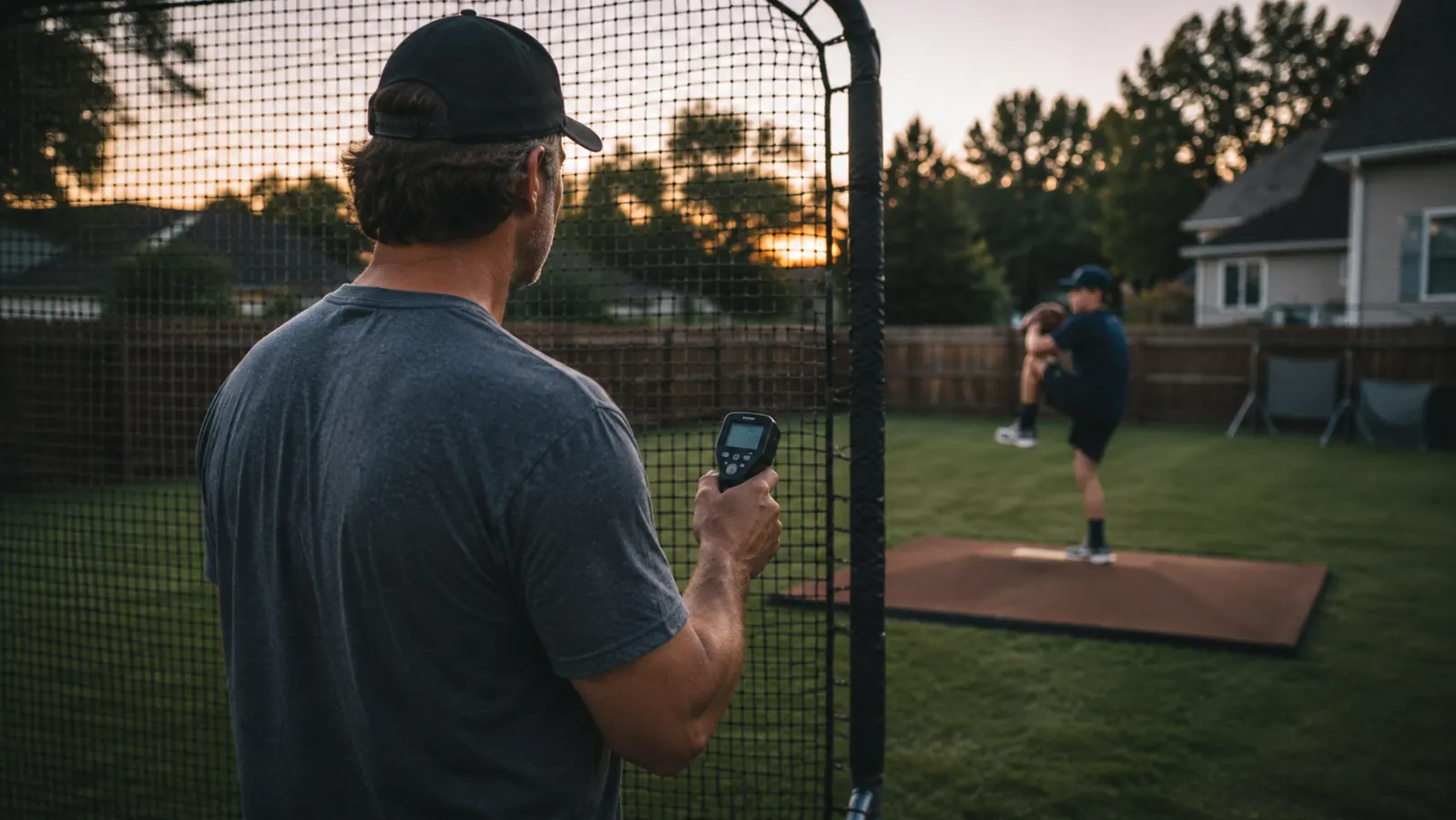
My son Beckett is thirteen and has been telling me since he was ten that he throws hard. Every dad on every rec-league bench has heard some version of this from his own kid, and every dad has believed his own kid a little more than the evidence probably supported. I was no different. I watched him pitch every Saturday for three seasons and told anyone who'd listen that he had a real arm. It took a small handheld radar called the Pocket Radar Smart Coach to prove whether any of that was true.
The problem showed up at a tryout in March. A travel program two towns over was holding open evaluations, and the coach running it, a guy named Dale who'd clearly seen five hundred dads say exactly what I was about to say, cut me off after one sentence. "Everybody's kid throws hard," he said. "Show me a number or he's just another arm in line." Beckett didn't make the first cut. Neither of us said much on the ride home.
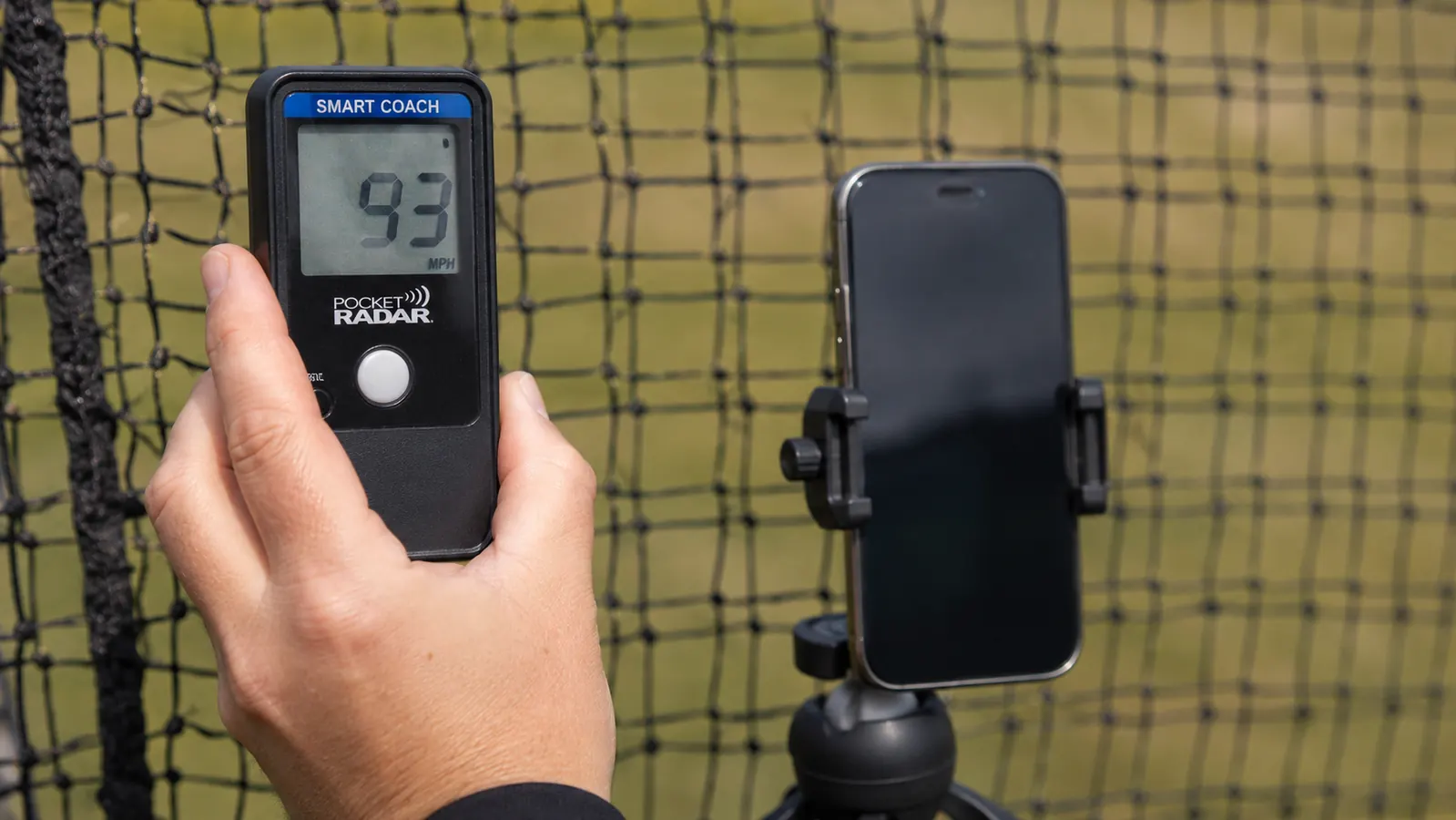
I'm not a coach. I play rec-league softball on Thursdays and I've re-gripped enough of my own bats to know my way around gear, but I'd never once measured anything about Beckett's pitching beyond "that one looked fast." So a couple weeks later I bought a Pocket Radar Smart Coach, the handheld unit, because I was tired of guessing and tired of losing tryouts to dads who apparently had actual data.
The first session in our backyard bullpen, first pitch, 57 miles an hour. I remember the number specifically because it felt low, lower than the fastballs I'd been bragging about for three years. Over ten pitches that evening he sat between 55 and 59, topping out once at 60. It stung a little to see it in writing instead of in my head, but it also made sense of the tryout. Dale wasn't wrong to ask for a number. I just hadn't had one.
We started tracking every bullpen after that, twice a week, mounted the Pocket Radar on a little tripod behind the L-screen so I could actually watch Beckett's mechanics instead of squinting at a phone. It reads off radar signature, not off video, so it doesn't care what angle I'm standing at or whether the porch light is decent, which mattered more than I expected once we moved sessions to weeknights after his homework.
I stopped being the dad who thought his kid threw hard, and became the dad who could tell you exactly how hard, and exactly how much that had changed since March.
Tired of your kid's velocity being a guess instead of a number?
This is the same handheld radar we started using after a travel tryout ended with 'show me a number or he's just another arm in line.' See today's price on the Pocket Radar Smart Coach.
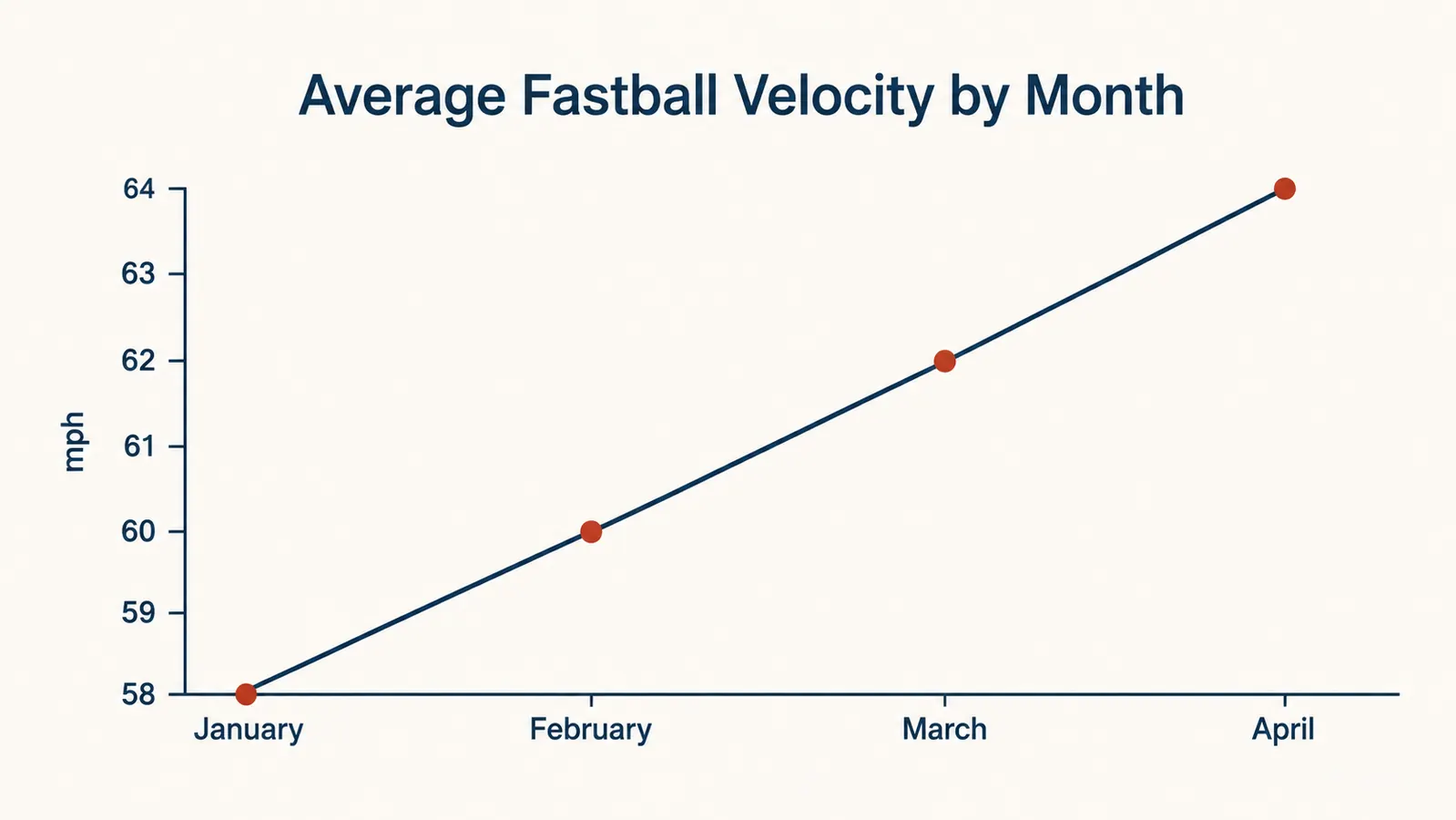
Amazon Check Today's Price on Amazon →By June, four months of twice-weekly sessions in, Beckett's average had climbed from 58 to 64, with a couple of pitches touching 66. That's not a huge jump on paper, six miles an hour, but it's the difference between the bottom third of a tryout group and the middle of the pack for his age, and more importantly it was a trend I could actually show someone instead of describe.
I'm not going to pretend the radar did that work. Beckett did the work, throwing bullpens in July heat when he'd rather have been inside, and his pitching coach adjusted his stride length in April, which is probably where most of that gain came from. What the radar did was let us see whether any of it was actually helping, instead of hoping it was and finding out three months later at another tryout.
It's not a perfect gadget. It struggles a bit if you're not standing close to the release point, maybe within 10 to 12 feet for a consistent read, and the sports app it pairs with occasionally drops a connection mid-session, which meant a couple of our early workouts had gaps in the log. I wouldn't call either of those dealbreakers, but they're real, and I'd rather tell you now than have you find out annoyed.
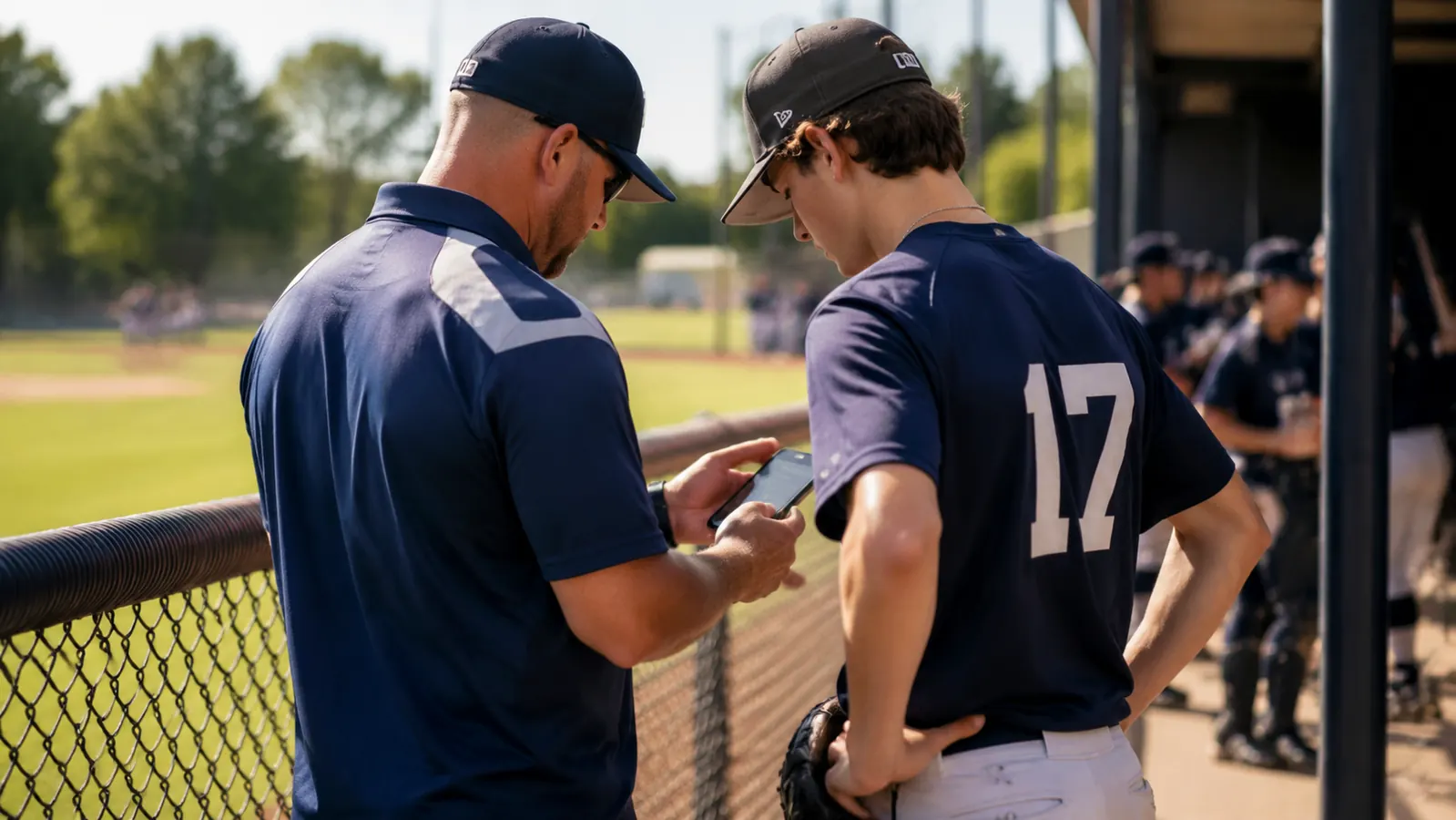
In August we went back to a different travel evaluation, not Dale's program, a different one across the county. When the coach asked how hard Beckett threw, I didn't say "pretty hard." I said "64 average over his last ten logged bullpens, touched 66 twice, tracked since March." He made the roster. I don't know for certain the number is why, plenty else goes into a roster spot, but I know it's the first tryout where I wasn't the dad guessing out loud.
What I'd Tell You If We Were Sitting at My Kitchen Table
If your kid is pitching or throwing at any level where someone else is eventually going to ask how hard, at some point you're going to want a real answer instead of a parent's proud guess. A premium radar isn't cheap, and it won't add velocity by itself, no gadget does that. What it does is turn "he throws hard" into a number you can track, defend, and actually improve against, which matters a lot more once your kid is standing in front of a coach who's heard every dad's opinion and stopped believing any of them. If your kid is nine and just wants to have fun playing catch, save your money. If he's asking to be evaluated by anyone who isn't you, this is worth having before that conversation, not after.
Stop guessing at your kid's velocity
A tryout coach isn't going to take your word for it. See today's price on the radar we started using after ours found that out the hard way.
Amazon Check Today's Price on Amazon →