
I bought the Pocket Radar Smart Coach in September of 2024, not because I'm the kind of baseball dad who thinks every backyard needs a radar gun, but because Eli's travel team coach started asking for velocity trends alongside pitch counts for a college showcase packet, and I got tired of guessing at numbers off a stopwatch app. Eli was twelve then, a right-handed pitcher working his way up from 54-foot mounds to 60 feet 6 inches. I'm writing this after 22 months of using it, through two travel seasons and one freshman high school season, so this isn't a first-week impression. It's what actually happened.
It's also not cheap. At the premium end of the market, the Pocket Radar Smart Coach costs more than some of the bats in our garage, and more than I want to admit I've spent chasing a number on a screen. So the question I kept asking myself all season wasn't "does it work," it was "does it earn that price tag for a family that isn't chasing a D1 offer." I'll answer that honestly by the end.
The Quick Verdict
Accurate enough to trust, simple enough for a parent to run solo, but priced for families who are already committed to tracking development, not casual backyard use.
Amazon Check Today's Price →Stop guessing at your pitcher's numbers from the bleachers.
If you're eyeballing velocity off a stopwatch or trusting whatever a scout tells you after a tryout, you're working with bad data. See current pricing and availability on the Pocket Radar Smart Coach.
Amazon Check Today's Price on Amazon →How I've Used It
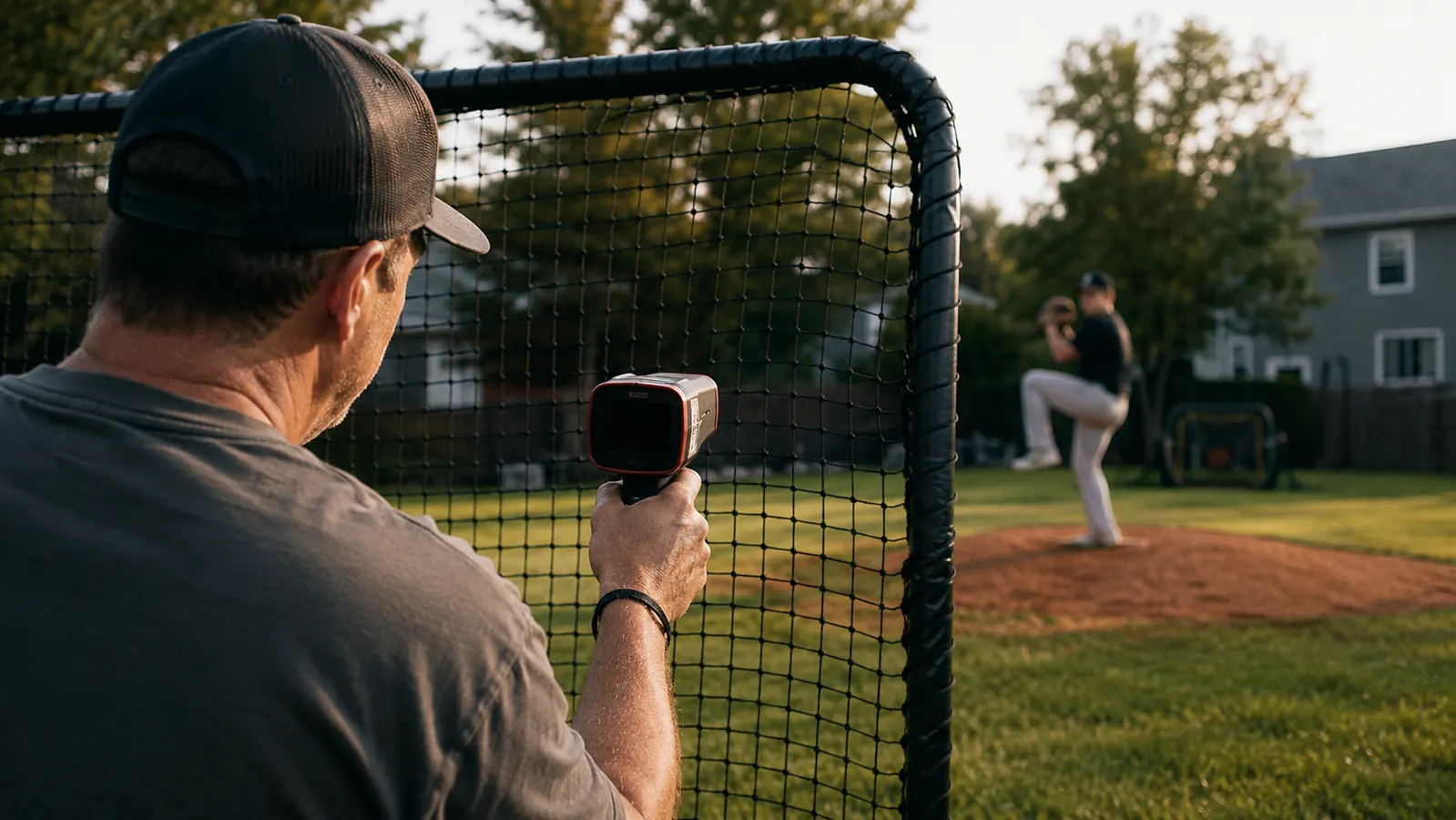
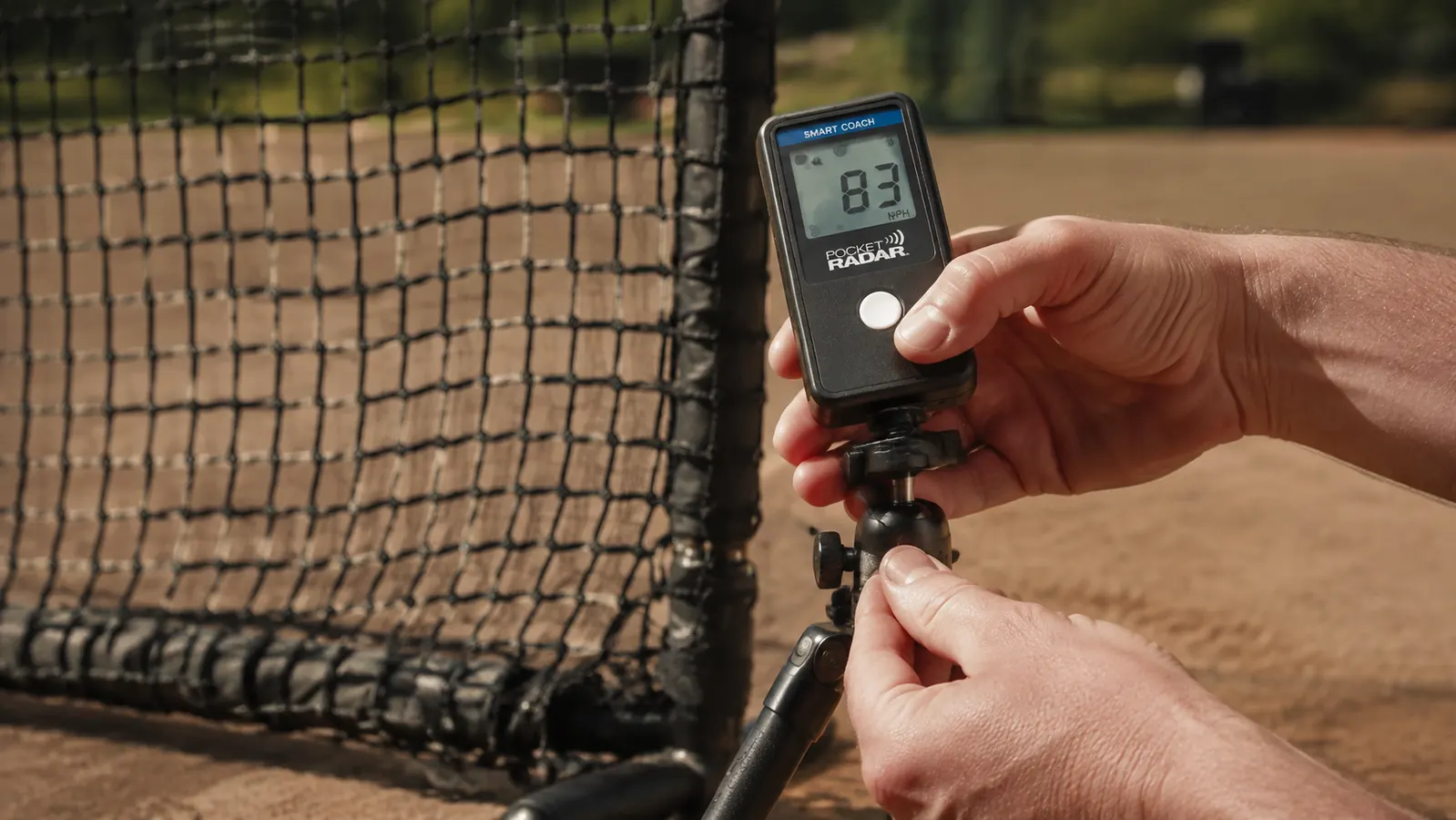
Our setup is unglamorous. We use a portable L-screen and a chunk of driveway that Eli's mom has stopped parking in front of, and I mount the radar unit on a $28 mini tripod, positioned just behind and slightly to the side of the screen, roughly in line with the pitcher's release point the way the manual recommends. That positioning matters more than I expected going in. Point the unit even slightly off-axis and the reading drops, sometimes by 2 to 3 mph, which is exactly the kind of error that makes a parent either overstate or understate real progress.
Most weeks it's two bullpen sessions of 25 to 35 pitches, logged through the Pocket Radar app on my phone via Bluetooth. I'm not a coach and I don't pretend the numbers replace one. What I use it for is simple: is the fastball trending up, is it trending down after a growth spurt or a tired week, and does the changeup actually have enough separation from the fastball to be worth throwing in a game. Those are parent-level questions, not scouting-report questions, and the unit answers them fine.
The Bluetooth pairing is the one thing that's tested my patience the most. It's reliable maybe nine times out of ten. The tenth time, I'm standing behind the screen re-opening the app while Eli waits on the mound, and that gets old on a cold evening when he's trying to stay loose.
Getting Readings You Can Actually Trust
The number that mattered most to me was how the Smart Coach compared to a stadium-grade radar gun, because a handheld unit is worthless if it's lying to us by 5 mph. We got our answer at a travel tournament in Dayton last June, where the host complex had a fixed radar display in center field reading every pitch for the crowd. I stood behind our own screen with the Pocket Radar running the entire outing. Across eleven fastballs I logged during that game, the Pocket Radar readings sat within 1 to 2 mph of the stadium gun on all but one pitch, and that one outlier was a ball Eli yanked well off the plate, which likely affected both guns similarly.
That result matches what Pocket Radar claims about the underlying sensor, which is the same Doppler technology used in their pro-level units, just packaged into a smaller, cheaper body with fewer stadium-grade features. I went in skeptical of a company selling a mid-priced unit that shares DNA with equipment police departments use for traffic enforcement. I came out of that comparison mostly convinced. Mostly, because a single side-by-side test isn't a lab study, and I'd never claim this thing is interchangeable with a professional stadium system.
Where accuracy gets shakier is distance and angle. Push the unit past about 90 feet from the release point, or set it up at a sharp angle instead of roughly behind the pitcher, and the readings start drifting low. Pocket Radar is upfront about this in their documentation, but it's easy to skip that section and just start recording, which is exactly what I did the first two weeks before I noticed our numbers looked suspiciously slow.
We've also run it through a genuinely wet spring, drizzle at a Tuesday bullpen more than once, and a couple of humid August doubleheaders where the unit sat out in direct sun for two hours between games. No moisture issues, no overheating shutdown, nothing. The housing feels solid in a way that matches the price, which is a small thing but it's the kind of detail you only notice after enough sessions to have actually tested it.
A Full Season of Bullpens, Not Just a Tryout Day
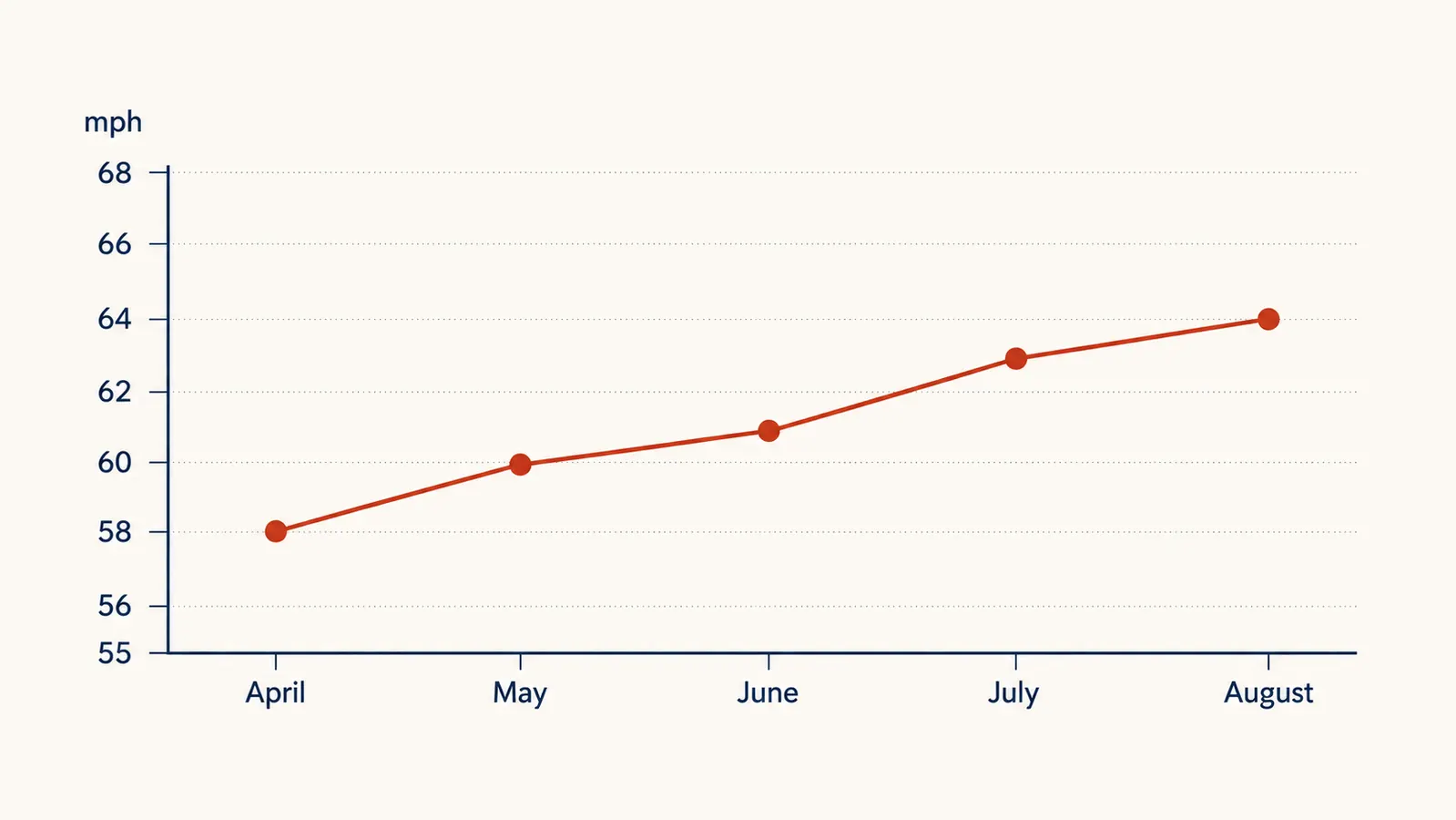
A lot of radar gun reviews online read like someone used the thing twice at a showcase and called it a day. Our data covers an actual season, April through August of last year, logged twice a week whenever weather allowed. Eli's average fastball opened that stretch at 58 mph in April, still cold and just back from a light winter, and closed at 64 mph by the end of August after a summer of mound work and a growth spurt that added about two inches. That's a real trend line, not a single flattering number from a good day.
What that longer view gave us that a one-time reading never could is the ability to spot a bad week early. In late June, his velocity dipped from 62 back down to 59 for about ten days, which turned out to be a dead-arm stretch after a tournament weekend with too many innings. Without the numbers, that would have looked like normal day-to-day variation. With them, it was obvious enough that we backed off his throwing volume for a week, which is the kind of decision I'd rather make with data than with a dad's gut feeling.
The battery has held up fine across all of that. Pocket Radar rates it around four hours of continuous use, and in practice a full charge easily covers two bullpen sessions before I need to plug it in again. I've never had it die mid-session, which is more than I can say for some of the other gear in our bag.
The included zippered case has ridden in a bat bag through two seasons of tournament travel, tossed in the trunk between fields, dropped once off a dugout bench onto asphalt. The unit itself has a couple of scuff marks to show for it but still reads exactly like it did on day one. At this price point I expected it to feel more delicate than it actually is.
The App and What the Data Actually Looks Like
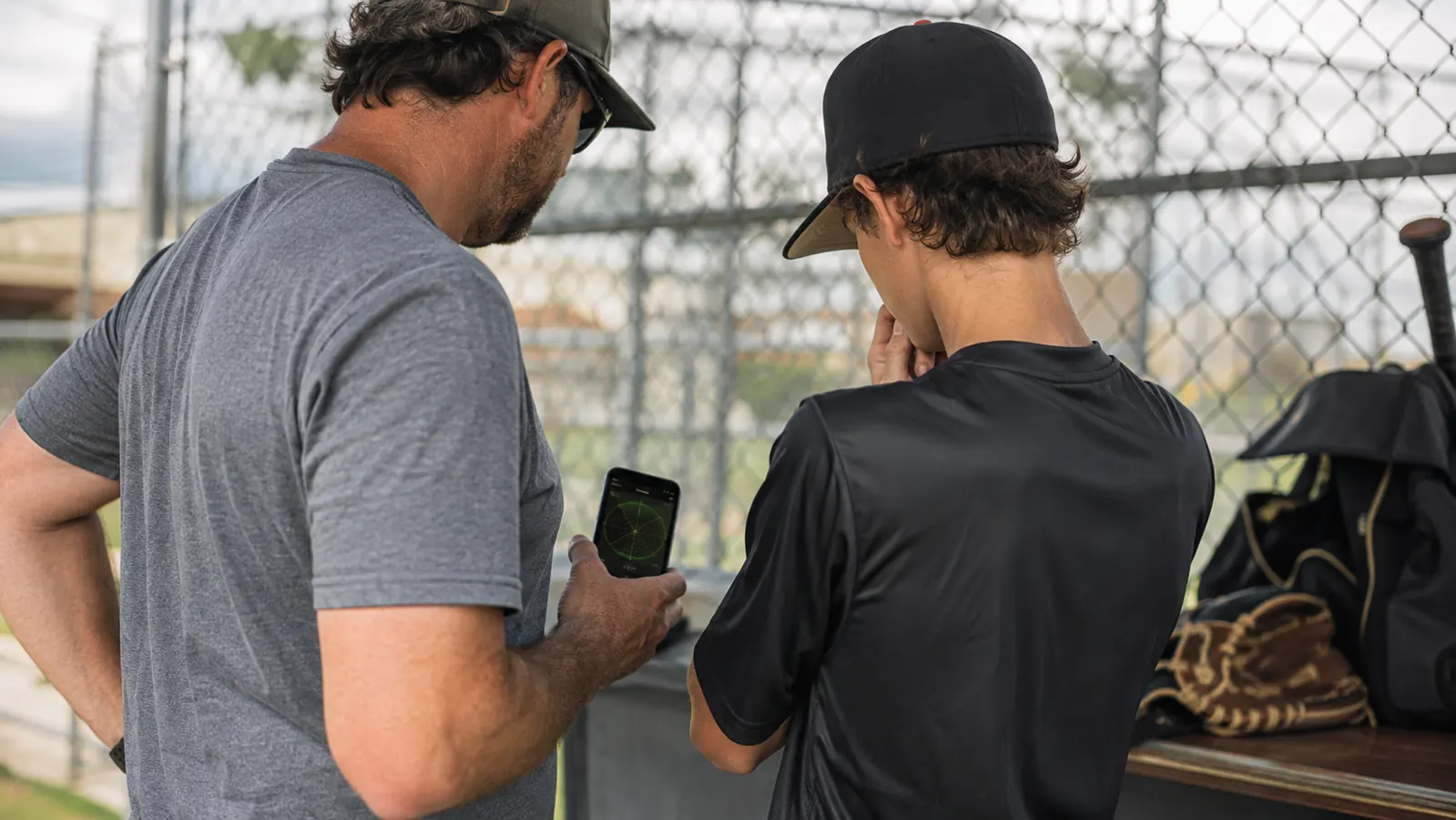
The free Pocket Radar app logs every pitch with a timestamp and velocity, and you can tag pitch type manually, which we do religiously because "fastball vs changeup separation" was the whole reason I bought this in the first place. The app will also record short video clips synced to the radar reading if you want to overlay mechanics with velocity, though I'll admit we've used that feature maybe a dozen times total. It's neat, it's just not something a parent standing behind a screen has the bandwidth to manage every session.
Exporting the season log to send to Eli's travel coach is straightforward, a CSV export from the app that I've dropped into a spreadsheet more than once. That's the feature that actually justified the purchase in year one, since the coach used those numbers alongside game pitch counts to manage innings across the roster.
The radar gun didn't make Eli throw harder. It just stopped us from arguing about whether he actually was.
It's Not Only for Pitchers
I've also pointed the unit at my own fastball on Sunday mornings in the 35-and-over rec league I still play in, mostly for the entertainment value of watching my velocity sit in the low 60s next to my son's climbing number. That's not a serious use case, but it points at something real: the Smart Coach works fine on exit velocity off the bat too, not just pitching. A couple of Eli's teammates have used it to check bat speed and ball exit velo during BP, and the readings there tracked sensibly with what we'd expect from a wood bat versus a BBCOR aluminum bat, faster off the metal every time.
What We Almost Bought Instead
Before this, we tried a generic handheld radar gun from a different brand for about two months. The readings bounced around by 8 to 10 mph between throws that looked identical to the eye, and there was no app, no logging, nothing to send a coach except a number I'd scribble on my phone's notes app. It went back in the box after our second tournament and never came back out.
I also looked hard at Pocket Radar's own cheaper Ball Coach model, which runs at a lower price point. It uses similar Doppler tech but drops the app connectivity and the video-sync feature entirely, so you get a number on a small screen and nothing else. For casual use that's probably fine. For a coach who wanted a logged season of data he could actually review, it wasn't going to cut it, and that gap is the entire reason we paid the premium for the Smart Coach instead.
The other thing we considered, briefly, was a swing sensor that clips onto the knob of a bat instead of a radar gun. It's a fine product for what it measures, but it answers a different question entirely, bat speed and swing plane, not pitch velocity, so it was never really a substitute. If your goal is tracking a pitcher's fastball, a swing sensor doesn't get you there no matter how good the reviews are.
What I Liked
- Readings landed within 1 to 2 mph of a stadium radar gun in our side-by-side tournament test
- Simple enough for one parent to run solo behind a screen with no second person needed
- Battery genuinely lasts two full sessions on a charge
- CSV export makes sharing season-long velocity trends with a coach painless
- Works on exit velocity off the bat, not just pitch speed
- Held up to rain, sun, and a tournament season of trunk-and-bat-bag travel without a hiccup
Where It Falls Short
- Premium pricing is a real barrier for a family just curious about numbers, not committed to tracking development
- Bluetooth pairing drops roughly one session in ten
- Accuracy degrades noticeably past about 90 feet or at a sharp angle to the pitcher
- Video-sync feature is nice on paper but too fiddly to use every session
Who This Is For
This makes sense for a family that's already invested in a kid's development, travel ball, a private pitching coach, a college or showcase track, where objective velocity data actually changes a decision: how many innings to throw, whether a new grip is adding or costing speed, what to put in a recruiting packet. If you're already spending money on lessons and tournament fees, a tool you'll use twice a week for years is a reasonable add, and ours has more than paid for itself in avoided guesswork over 22 months.
Who Should Skip It
If your kid plays rec ball for fun, or you're just curious what his fastball looks like once or twice a summer, this is overkill. A cheaper radar gun in the budget range will satisfy that curiosity without the app, the Bluetooth, or the price tag, and honestly the accuracy gap between those cheaper units and the Smart Coach only matters once you're using the numbers for real decisions. Buy this when the data changes something. Skip it when it would just sit in a drawer between tournaments.
If the numbers are going to decide innings and lineups, use a gun that won't lie to you.
Twenty-two months in, the Pocket Radar Smart Coach is the one piece of gear in our bag I'd replace immediately if it broke. Check today's price before your next tournament weekend.
Amazon Check Today's Price on Amazon →